


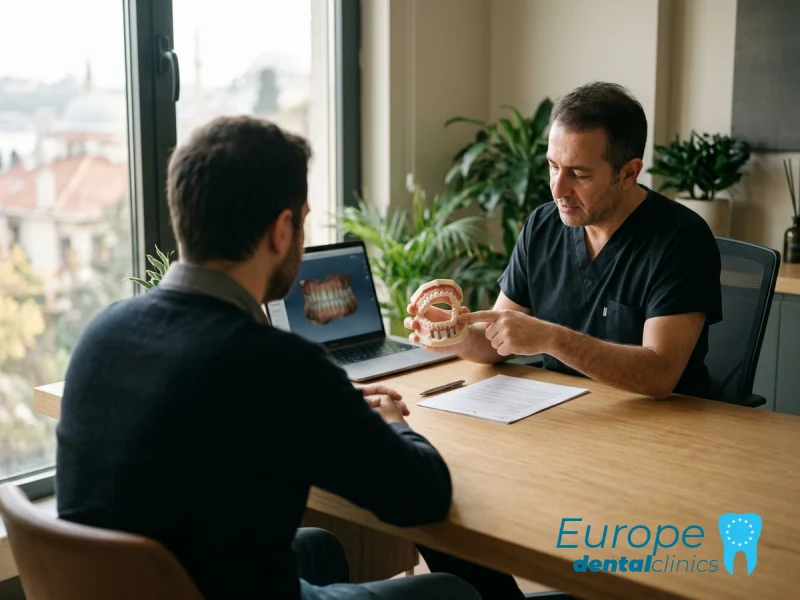
All-on-4 implants in Istanbul can replace a full arch of missing or failing teeth with a fixed bridge supported by four dental implants. For European patients considering treatment in Turkey, the decision involves surgery, long-term maintenance and a plan for care after returning home.
This guide explains how treatment works, who may be suitable and what to assess before committing to a clinic or booking flights.
How All-on-4 Dental Implants Work
The All-on-4 concept uses four implants to support a complete upper or lower bridge. Two implants towards the back are often angled to use available bone and avoid certain anatomical structures. This can reduce the need for bone grafting in selected patients, although grafting may still be necessary.
The bridge is fixed in place and usually removed only by a dental professional. It still needs daily cleaning underneath and regular professional maintenance.
Explore our dental treatment options, discover our clinic locations and meet our dentists for further information.
Who May Be Suitable for Treatment
All-on-4 may suit adults who have lost all teeth in one jaw, or whose remaining teeth cannot predictably be retained. Suitability depends on bone quantity, gum health, medical history and the ability to maintain oral hygiene.
Assessment Before a Treatment Plan
A dentist should examine your mouth and assess appropriate imaging, often including a CBCT scan. Smoking, uncontrolled diabetes, active gum disease and certain medicines can affect healing or treatment choices. Photographs alone cannot establish whether implants are suitable.
Understanding the Treatment Stages
Treatment may involve removing teeth, placing implants and fitting a temporary bridge. A fixed temporary bridge can sometimes be attached shortly after surgery if the implants have sufficient initial stability. Immediate loading is not suitable for everyone, so an alternative temporary replacement may be needed.
Temporary and Definitive Bridges
The early bridge protects appearance and function while tissues heal, but usually requires a restricted diet. The definitive bridge is generally made after healing and reassessment, often several months later. Ask how many visits your individual plan requires.
Risks and Alternatives to Discuss
Possible complications include infection, bleeding, implant failure, nerve injury, sinus problems and damage to surrounding structures. Later problems can include inflammation and bone loss around implants, loose screws or bridge fractures. Implants are not guaranteed to last for life.
Alternatives include conventional dentures, implant-retained removable dentures, bridges supported by more implants, or retaining treatable natural teeth. Healthy teeth should not be removed solely to simplify a package.
Choosing an Istanbul Clinic and Giving Consent
Check the treating dentist’s registration, relevant training and experience with full-arch rehabilitation. Request a written plan identifying proposed extractions, implant positions, bridge materials and who provides surgical and restorative care.
Informed consent should cover benefits, risks, alternatives and likely maintenance in a language you understand. Obtain an itemised quotation covering temporary and definitive teeth, investigations and possible additional treatment. Allow time to consider recommendations without pressure.
Planning Travel, Aftercare and Follow-up
Confirm the expected stay and review appointments before arranging travel. Your clinician should advise when flying is appropriate, especially after extractions, grafting or complications. Build flexibility into bookings and check insurance exclusions.
Before returning home, obtain records, implant details, cleaning instructions and an emergency contact. Agree who will manage complications locally, whether return visits to Istanbul may be needed and who pays. Ongoing follow-up remains essential even when the bridge feels comfortable.
Eating During the Healing Period
During early healing, excessive chewing forces can disturb the interface between implants and bone. Follow your clinician’s prescribed food texture and duration, even if you feel able to bite normally. Comfort does not confirm that implants have integrated.
Suitable meals may include scrambled eggs, soft fish, yoghurt and well-cooked lentils. Maintain protein and fluid intake, and avoid testing the bridge with crusty bread, nuts or sticky sweets. Introduce firmer foods only when your treating team advises.
Cleaning Beneath a Full-Arch Bridge
A fixed bridge leaves surfaces that a standard toothbrush cannot reach easily. Your dental team should demonstrate how to clean around each implant and beneath the replacement teeth, using your own bridge as the example.
Choosing Suitable Cleaning Aids
Depending on the design, suitable aids may include interdental brushes, implant floss or a water flosser. Use the sizes and technique recommended for you; forcing an oversized brush can injure soft tissue. An oral irrigator may help, but does not automatically replace mechanical cleaning.
Comparing Bridge Materials and Design
Ask what the proposed bridge contains: descriptions such as “premium teeth” provide little useful information. Acrylic or composite teeth supported by a framework and zirconia bridges have different repair requirements, wear patterns and costs.
No material is universally best. Available space, bite forces, appearance, opposing teeth and the ability to clean underneath all influence selection. Ask how a chipped tooth would be repaired and whether that repair could be completed near home.
Appearance and Speech
The amount of artificial gum required depends partly on previous tissue loss. Request an assessment of smile line, lip support and speech. A design that looks attractive in a photograph may feel bulky or allow air to escape during speaking.
Recognising Problems After Surgery
Some soreness, swelling and bruising can occur after implant surgery. Your written instructions should explain the expected pattern and how to take prescribed medicines. Do not change doses or start leftover antibiotics without professional advice.
- Seek urgent dental assessment for worsening pain, pus, fever, a changing bite or movement of the bridge.
- Obtain emergency medical help for difficulty breathing or swallowing, rapidly spreading swelling, or bleeding that does not settle with instructed pressure.
- Report persistent numbness promptly rather than waiting until your next planned trip.
Checking the Financial Commitment
Compare quotations for the same treatment scope and currency. Clarify whether sedation, prescriptions, protective appliances and repairs are included. Exchange-rate changes, time away from work and additional accommodation can affect your overall budget.
Read any warranty terms carefully. Coverage may depend on attendance, hygiene or smoking status, and may exclude travel expenses. A warranty is a contractual arrangement, not a promise of biological success.
Protecting the Bridge Over Time
If you clench or grind your teeth, discuss whether a protective night guard is appropriate. Report clicking, fractures or repeated screw loosening, since these may indicate mechanical overload. Never tighten components yourself. Keep a copy of the implant brand, component information and restorative records so another dentist can identify compatible parts when necessary.
Preparing Your Medical History for Implant Surgery
Give the treating team a complete list of prescribed medicines, supplements, allergies and previous reactions to dental treatment. Include conditions such as sleep apnoea, heart disease and bleeding disorders, even if they seem unrelated to your teeth.
Medicines That Need Particular Attention
Anticoagulants, steroids and medicines used for osteoporosis or cancer can affect surgical planning. Some antiresorptive medicines carry a risk of jawbone complications. Do not stop prescribed medication yourself. Your dentist may need to coordinate with your usual doctor before confirming treatment.
Understanding Anaesthesia and Sedation Options
Implant surgery is commonly performed with local anaesthetic. Sedation may help some patients manage anxiety, but its suitability depends on health, the procedure and the facilities available. General anaesthesia requires a separate assessment and appropriate monitoring.
If sedation is planned, obtain clear instructions about fasting, regular medicines and supervision afterwards. Arrange a responsible adult to accompany you where required. You may need to avoid driving, alcohol and important decisions for a specified period.
Differences Between Upper and Lower Jaw Treatment
The upper and lower jaws present different anatomical challenges. Upper jaw planning must account for the sinuses and often less dense bone; lower jaw planning must consider the nerves supplying sensation to the lower lip and chin.
Four implants may be appropriate in one arch but unsuitable in another. The number of implants should follow clinical findings, rather than a preference for a particular treatment label. Some patients benefit from a different distribution or additional support.
Adjusting to the Feel of Replacement Teeth
A full-arch bridge can feel different from natural teeth or a removable denture. You may initially notice changes in tongue space, saliva control or awareness of the teeth. Reading aloud can help you identify sounds that remain difficult during adaptation.
Changes That Deserve Assessment
Persistent cheek biting, food trapping or difficulty closing comfortably should be assessed. These problems may require changes to the contours or bite. Avoid filing or adjusting any part yourself, as apparently small alterations can affect strength and function.
Interpreting Success Rates and Patient Photographs
When a clinic presents a success percentage, ask what it measures and over what period. Implant survival means an implant remains present; it does not necessarily mean the patient has experienced no inflammation, repairs or discomfort.
Before-and-after images mainly show appearance. They cannot establish bone health, cleaning access or how comfortably someone eats. Published results also reflect particular patient groups and clinical settings, so they cannot predict your individual outcome.
Allowing Time for Decisions During Your Istanbul Visit
Keep the first consultation separate in your mind from a commitment to surgery. An examination may reveal findings that change the proposed approach. Ask for an explanation of any substantial revision and enough time to consider its consequences.
If you need an interpreter, arrange this before discussions about consent. Ensure you can communicate directly with the clinical team about pain, preferences and concerns. A travel companion can provide support, but your own understanding and voluntary agreement remain central to treatment.
Assessing Teeth Before Agreeing to Extractions
When some teeth remain, request a tooth-by-tooth explanation of their prognosis. Deep decay, root fractures and advanced loss of supporting bone can make preservation difficult, but the outlook varies. A full-arch recommendation should account for which teeth could remain useful and for how long.
If the decision is uncertain, an independent opinion from a dentist experienced in restorative care or gum treatment can help. Extraction is irreversible, so understand the reasoning before proceeding.
Planning for Unexpected Bone Findings
Scans help clinicians plan surgery, but the condition of bone encountered during treatment may require a change. The team might recommend grafting, a different implant position or a period of healing before placing implants.
Agreeing the Limits of Changes
Before surgery, discuss which adjustments you authorise and which would require a further conversation. Establish how additional procedures would affect recovery, fees and the overall schedule. If graft material is proposed, ask about its source and available alternatives, particularly if you have religious or personal preferences.
Managing an Implant That Does Not Integrate
An implant can fail to bond adequately with bone during healing. This may require its removal and a reassessment of the remaining support. The appropriate response depends on the cause, the implant position and whether the bridge can function safely.
Possible next steps include allowing the site to heal, placing another implant later or redesigning the restoration. Replacement is not always immediate or straightforward. Ask how the clinic would maintain appearance and eating function during an interruption to treatment.
Considering the Teeth in the Opposite Jaw
The teeth that meet your new bridge influence how forces pass through it. Natural teeth, a removable denture and another implant bridge each behave differently during biting. Wear, uneven contacts or an unstable opposing denture may need attention as part of planning.
Treating one arch does not automatically mean the other needs implants. Ask whether any proposed work on the opposite jaw is necessary for health, comfort or bite stability, and have it explained separately.
Matching Treatment to Your Ability to Maintain It
Arthritis, reduced vision or limited hand movement can make detailed cleaning difficult. Discuss these practical issues before the bridge is designed. A demonstration with suitable aids can reveal whether the proposed daily routine is manageable.
If you rely on a carer, include them in hygiene instruction with your permission. Ease of maintenance should influence treatment selection alongside appearance. For some patients, a removable design may offer more accessible cleaning and simpler handling of future care needs.
Understanding Complaints and Cross-Border Redress
Identify the legal name of the provider responsible for treatment and obtain its written complaints procedure. A booking agency, hotel organiser and dental clinic may be separate businesses with different responsibilities.
Keep copies of contracts, invoices and clinical correspondence. If a dispute develops, these help establish what was agreed. Routes for complaints, compensation and enforcement depend on the provider and applicable law; protections available in your home country may not extend to treatment in Turkey.
Frequently asked questions
What are All-on-4 dental implants?
All-on-4 is a treatment that supports a fixed bridge of teeth on four implants placed in the upper or lower jaw. The rear implants are often angled to make use of available bone and avoid certain anatomical structures. The treatment replaces a full arch of missing or failing teeth; treating both jaws usually requires a separate set of implants and a bridge for each arch.
Who is suitable for All-on-4 implants in Istanbul?
Suitability depends on your jawbone, gum health, medical history and ability to maintain good oral hygiene. A dentist should assess you through an examination and appropriate imaging, usually including a CBCT scan. Smoking, active gum disease, poorly controlled diabetes and certain medicines can affect healing or increase complications. Some patients may benefit from a different number of implants or another treatment approach.
How much do All-on-4 implants cost in Istanbul?
Prices vary according to the clinic, implant system, bridge material and complexity of treatment. Ask whether the quoted price covers one jaw or both, and whether it includes extractions, scans, temporary teeth, the final bridge, sedation and follow-up appointments. Travel, accommodation and treatment for complications may be charged separately. A written, itemised quotation helps you compare clinics on the same basis.
How long does All-on-4 treatment take, and how many visits are needed?
Treatment commonly involves an initial assessment and surgery, followed by a healing period and a later visit for the final bridge. Healing often takes around three to six months, although individual circumstances can change this timetable. Patients travelling to Istanbul may need two or more trips, with several appointments during each stay. Confirm the expected schedule and any possible delays before booking flights.
Can I receive fixed teeth on the same day as implant surgery?
Some patients can receive a fixed temporary bridge on the day of surgery or shortly afterwards. This depends on the implants achieving sufficient initial stability, the condition of the bone and the planned bite. Immediate loading cannot be guaranteed, and an alternative temporary restoration may be needed. The final bridge is usually fitted after healing and confirmation that the implants have integrated with the bone.
Is All-on-4 surgery painful, and what is recovery like?
Surgery is normally performed with local anaesthetic, with sedation available when appropriate. You may feel pressure during treatment, while swelling, bruising and soreness are common afterwards. Follow your clinician’s instructions about pain relief, cleaning and a soft diet while the implants heal. Increasing pain, persistent bleeding, fever or a loose bridge should prompt urgent contact with the treating clinic or a local dental professional.
Will I need bone grafting before All-on-4 treatment?
Angled implants can sometimes make All-on-4 possible without bone grafting, but this depends on the amount and quality of available bone. Significant bone loss may require grafting, a different implant arrangement or another specialist approach. A CBCT scan helps the clinician assess these options. Be cautious about any promise of treatment without grafting made before a proper assessment.
How can I choose a clinic for All-on-4 implants in Istanbul?
Check the treating clinician’s professional registration, relevant training and experience with full-arch implant treatment. Ask who will perform each stage, which implant system will be used and how the clinic manages complications. Request a written treatment plan, consent information in a language you understand and copies of your clinical records. Reviews and before-and-after photographs can add context, but they do not establish clinical quality on their own.
What are the risks, and how long can All-on-4 implants last?
Risks include infection, failure of an implant to integrate, nerve or sinus complications, and inflammation or bone loss around implants. The bridge can also develop wear, fractures or loose screws. Implants may function for many years with suitable care, but neither the implants nor the bridge are guaranteed to last a lifetime. Smoking, grinding your teeth and inadequate cleaning can increase the need for repairs or further treatment.
What aftercare should I arrange when returning home from Istanbul?
Arrange ongoing reviews with a dentist who is willing and equipped to maintain your implant bridge. Obtain your implant details, treatment records, radiographs and a written aftercare plan before leaving Istanbul. Daily cleaning beneath the bridge and around the implants is essential, alongside professional maintenance. Clarify who will handle urgent problems, whether any warranty has conditions, and who pays for repairs, replacement parts or return travel.
