


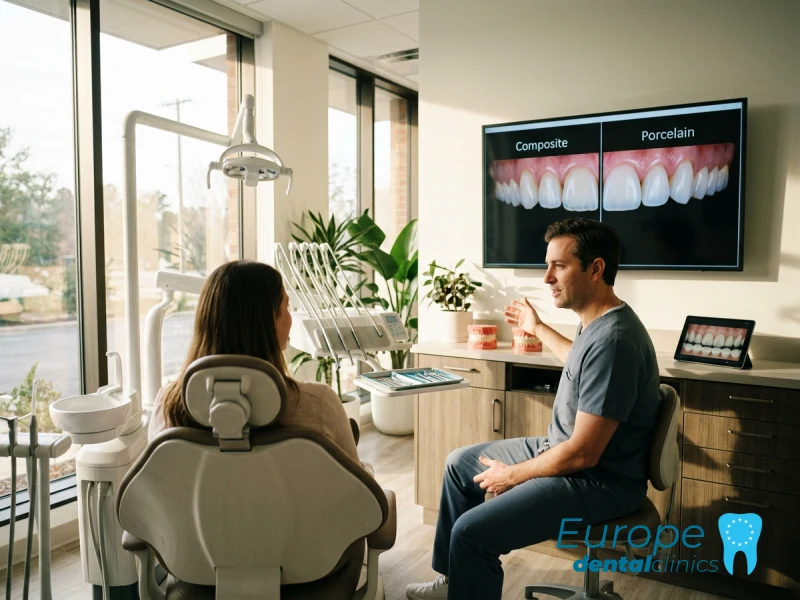
Composite Veneers vs Porcelain Veneers: An Introduction
Choosing between composite veneers and porcelain veneers involves more than comparing appearance or advertised treatment costs. Both can improve the colour, shape and proportion of teeth, but they differ in materials, preparation, longevity, maintenance and repair. These differences matter particularly if you are travelling from the UK or another European country to Istanbul for dental treatment.
A suitable treatment should follow a clinical examination, photographs, dental records and, where appropriate, X-rays. Your dentist should assess decay, gum health, enamel thickness, bite, tooth wear and any habits such as grinding. Veneers placed over unhealthy teeth can fail early, regardless of the material selected.
What Are Composite Veneers?
Composite veneers are made from a tooth coloured resin applied directly to the tooth. The dentist shapes the material by hand and hardens it with a curing light. In some cases, little or no enamel is removed, although preparation depends on the tooth’s position, existing fillings and the result being planned.
Composite treatment can often be completed in fewer appointments. It may be useful for small chips, mild shape changes or limited cosmetic correction. The final result depends heavily on the dentist’s technique, the quality of the resin and your cleaning and eating habits.
Explore our dental treatment options, discover our clinic locations and meet our dentists for further information.
What Are Porcelain Veneers?
Porcelain veneers are thin ceramic restorations made in a dental laboratory or with a digital manufacturing system. The dentist normally prepares the front surface of the tooth before taking scans or impressions. Temporary veneers may be fitted while the definitive restorations are produced.
Porcelain is generally more resistant to staining and surface wear than composite. It can also provide a highly controlled appearance where several teeth need coordinated changes in shade, length or shape. It remains a dental restoration, however, and can chip, debond or require replacement.
Appearance, Strength and Longevity
Both materials can look natural when designed carefully. Composite can be polished and repaired directly in the mouth, but it may lose its gloss or absorb staining from coffee, tea, red wine and tobacco. Porcelain usually keeps its surface colour more consistently, although the teeth beneath and beside the veneers can still change shade.
Longevity varies with oral hygiene, bite forces, diet, smoking and professional care. A dentist should explain the expected lifespan for your individual situation rather than promise a fixed number of years.
Tooth Preparation and Reversibility
Some composite veneers require minimal preparation, but this does not make every case reversible. Porcelain veneers usually involve permanent removal of some enamel. Once enamel has been altered, the teeth will normally need ongoing coverage or another form of restoration.
Ask to see a proposed tooth shape before treatment. A digital preview, wax-up or temporary mock-up can help you assess tooth length, speech, lip support and how the design suits your face. A preview is a planning aid, not a guarantee of the final result.
Risks, Alternatives and Consent
Potential problems include sensitivity, gum irritation, bite discomfort, fracture, staining at the margins, decay and dissatisfaction with the shape or shade. Treating many healthy teeth for a cosmetic change may also remove sound enamel. Alternatives can include whitening, orthodontic treatment, enamel reshaping, bonding on selected teeth, crowns for heavily damaged teeth or no treatment.
Before signing consent, request a written plan covering the number of teeth, material, preparation, laboratory arrangements, provisional restorations, total fees, foreseeable complications and what happens if a veneer fails. Confirm who will provide emergency care after you return home.
Costs and Treatment Planning in Istanbul
The quoted fee for veneers in Istanbul may cover different elements from one clinic to another. Some estimates include consultation, scans, laboratory work, temporary restorations and follow-up appointments. Others may list these separately. Before booking, ask for an itemised written treatment plan that identifies the material, the number of teeth and the stages included.
A lower fee can reflect differences in laboratory processes, clinician experience, the complexity of your case or the level of aftercare provided. It does not by itself show whether treatment is suitable or safe. Compare the proposed treatment and the credentials of the treating dentist, rather than comparing headline prices alone.
Choosing a Dentist and Clinic
Look for a dentist who explains the diagnosis, limitations and alternatives in clear language. The clinic should be able to tell you who will carry out each stage of treatment and whether an external laboratory is involved. You should receive a clinical assessment before committing to extensive cosmetic work.
Request photographs of comparable cases, while understanding that another patient’s result cannot predict yours. Check that the images represent the dentist’s own work and clarify whether they show immediate results or healed treatment. Be cautious of marketing that promises a perfect smile, permanent results or a fixed outcome for every patient.
Ask how the clinic records the shade, shape and fit of the restorations. You should also understand how your dental records, scans and laboratory details will be made available if you need care in your home country.
Preparing for Dental Travel
Do not arrange flights before you know how many visits are required. A first appointment may involve examination and planning, followed by preparation and temporary veneers. A later visit may be needed to assess the fit and approve the final appearance. Complex cases can require additional time.
Allow extra days in Istanbul in case the dentist needs to adjust the bite, remake a restoration or manage sensitivity. Avoid scheduling treatment immediately before an important event or a return journey that cannot be changed. Keep copies of your medical history, medication list, allergies and previous dental records.
Travel insurance may exclude planned dental treatment and complications arising from it. Check the policy wording carefully and consider how you would pay for unexpected accommodation, a delayed return or treatment after coming home.
Aftercare During the First Days
Follow the clinic’s instructions about brushing, flossing, prescribed medicines and food. Soft foods may be more comfortable while any tenderness settles. Avoid biting hard objects, opening packaging with your teeth or testing the veneers against unusually tough foods.
Temporary restorations require particular care because they may be less secure than the final veneers. Contact the clinic promptly if a veneer feels loose, your bite feels uneven, pain increases or swelling develops. Severe swelling, difficulty breathing or difficulty swallowing requires urgent medical attention.
Follow-up After Returning Home
Arrange a review with a dentist in your home country if you develop discomfort or want an independent assessment. A local dentist may be able to treat an urgent problem, although they may not accept responsibility for work completed elsewhere. Confirm in advance whether the Istanbul clinic pays any costs associated with repairs, travel or treatment by another dentist.
Maintain regular examinations and professional cleaning. Veneers do not protect against decay or gum disease, so clean carefully around the margins and use any recommended interdental aids. A night guard may be advised if you grind or clench your teeth.
Making a Suitable Choice
Composite veneers may suit limited changes and patients who value easier repair or less invasive treatment. Porcelain may suit patients seeking greater stain resistance and a more controlled result across several teeth. Your dental health, bite, expectations and willingness to accept permanent preparation should guide the decision.
How Existing Fillings Affect Veneer Suitability
Large fillings, cracks and previous root canal treatment can change the choice between composite and porcelain veneers. A veneer relies on the remaining tooth structure for support. Teeth with extensive damage may need a different restoration, while a small, stable filling may be compatible with either material.
Bonding is generally more predictable when sufficient healthy enamel remains. Ask your dentist to explain the condition of each tooth individually; neighbouring teeth do not automatically need identical treatment.
Managing Dark Teeth and Uneven Colour
The underlying tooth colour influences how a veneer looks. A very thin, translucent restoration may allow a dark tooth to show through. Masking severe discolouration can require more opaque material or additional thickness, which may affect the amount of preparation needed.
Whitening Before Shade Selection
If whitening is appropriate, it is usually planned before the final veneer shade is selected. The dentist should allow time for the colour to stabilise and for bonding conditions to recover. Existing composite and ceramic restorations will not whiten alongside natural teeth, which can create a mismatch.
Veneer Edges and Gum Health
The position and shape of a veneer’s edge affect how easily you can clean around it. Excess material, rough margins or an overly bulky contour can retain plaque and irritate the gums. Healthy tissue helps the dentist assess the margin accurately and supports a more natural appearance.
Gum recession can later expose the junction between the veneer and tooth. This may produce a visible line or sensitivity even when the restoration remains attached. Any active gum disease should be stabilised before cosmetic treatment begins.
Understanding Bite and Tooth Position
Veneers change tooth surfaces but do not move the roots. Trying to disguise a prominently positioned tooth may require substantial reduction, while adding material to a crowded tooth can make it look bulky. Orthodontic assessment can clarify whether moving the teeth first would preserve more tooth structure.
Planning Contact During Jaw Movement
Your dentist should assess how the front teeth meet when you close, slide forwards and move sideways. Edge-to-edge contacts or a deep bite may place heavy forces on veneers. These findings can affect material choice, design and whether veneers are advisable at all.
Checking Veneers Before Final Bonding
For porcelain veneers, a try-in appointment allows assessment of colour, fit and symmetry before permanent bonding. View the proposed result under suitable lighting and check that you can speak comfortably. Ask for an explanation if the appearance differs from the agreed plan.
Composite veneers are usually assessed as they are shaped. Small refinements may be possible during the appointment, but repeated additions or aggressive polishing can affect contours. Report areas that catch your tongue or prevent comfortable flossing.
Planning for Future Repair and Replacement
Composite repairs can often be made by adding resin after preparing the damaged surface. Matching older material may become harder as it changes colour. A chipped porcelain veneer sometimes accepts a composite repair, although the appearance and durability may be less predictable.
Replacing either type can involve further tooth alteration. Discuss this longer-term maintenance cycle when weighing the initial treatment, particularly if you are considering veneers on otherwise healthy teeth early in adulthood.
Frequently asked questions
What is the difference between composite veneers and porcelain veneers?
Composite veneers use tooth-coloured resin applied directly to the teeth and shaped by a dentist. Porcelain veneers are thin ceramic shells usually made in a dental laboratory and bonded to the front surfaces of teeth. Both can improve tooth shape, colour and minor irregularities, but they differ in cost, durability, appearance and preparation.
Do composite veneers or porcelain veneers look more natural?
Both can look natural when carefully planned and skilfully made. Porcelain generally mimics the translucency and light reflection of enamel more closely and maintains its gloss well. Composite can also provide attractive results, although matching complex shades and translucency depends heavily on the dentist’s technique.
How long do composite veneers last compared with porcelain veneers?
Composite veneers commonly last around five to seven years, while porcelain veneers often last around ten to fifteen years. Some last longer, while others need earlier repair or replacement. Their lifespan depends on oral hygiene, bite forces, teeth grinding, diet and regular dental care; these ranges are estimates rather than guarantees.
Are composite veneers cheaper than porcelain veneers?
Composite veneers generally cost less initially because they are usually made directly in the mouth and do not require laboratory fabrication. Porcelain veneers typically involve higher material and laboratory costs. Compare written estimates that include preparation, temporary veneers where needed, follow-up care and likely future maintenance, as repeated repairs or replacements can affect the overall cost.
Do composite and porcelain veneers require enamel removal?
Composite veneers can often be added with little or no enamel removal, although some reshaping may be needed. Porcelain veneers commonly require a thin layer of enamel to be removed to create space and achieve a suitable contour. Minimal-preparation options suit selected cases. Any enamel removal is irreversible, and neither treatment should be assumed to be fully reversible.
Which type of veneer is quicker to fit?
Direct composite veneers can often be completed in one appointment, although planning and preliminary dental treatment may require additional visits. Porcelain veneers usually involve at least two treatment appointments, with time between them for laboratory manufacture. Temporary veneers may be needed while the permanent ones are being made.
Do composite veneers stain more easily than porcelain veneers?
Composite is more prone to surface staining and loss of gloss over time, particularly with smoking and frequent exposure to tea, coffee or other strongly coloured drinks. Porcelain is more resistant to staining, although staining can still develop around its edges. Professional cleaning and, for composite, polishing can help maintain appearance. Whitening products do not reliably lighten either veneer material.
Are composite veneers easier to repair than porcelain veneers?
Composite veneers are generally easier to repair because a dentist can often add resin directly to a chipped or worn area. Small chips in porcelain can sometimes be polished or repaired with composite, but larger fractures may require the veneer to be replaced. The best approach depends on the size and position of the damage and the condition of the underlying tooth.
Who is suitable for composite veneers or porcelain veneers?
Both may suit people with healthy teeth and gums who want to improve discolouration, small gaps, minor chips or tooth shape. Composite can suit smaller changes or a more conservative approach, while porcelain may suit people seeking greater colour stability and longer-lasting results. Decay, gum disease, significant misalignment and teeth grinding need assessment before treatment. Whitening, orthodontics or simpler bonding may be more appropriate in some cases.
How should I care for composite veneers and porcelain veneers?
Brush twice daily with fluoride toothpaste, clean between your teeth daily and attend dental reviews as advised. Avoid biting nails, opening packaging with your teeth or chewing hard objects. If you grind your teeth, your dentist may recommend a protective night guard. Composite may need periodic polishing or repairs, while both types require checks for damage, gum problems and decay around the margins.
