


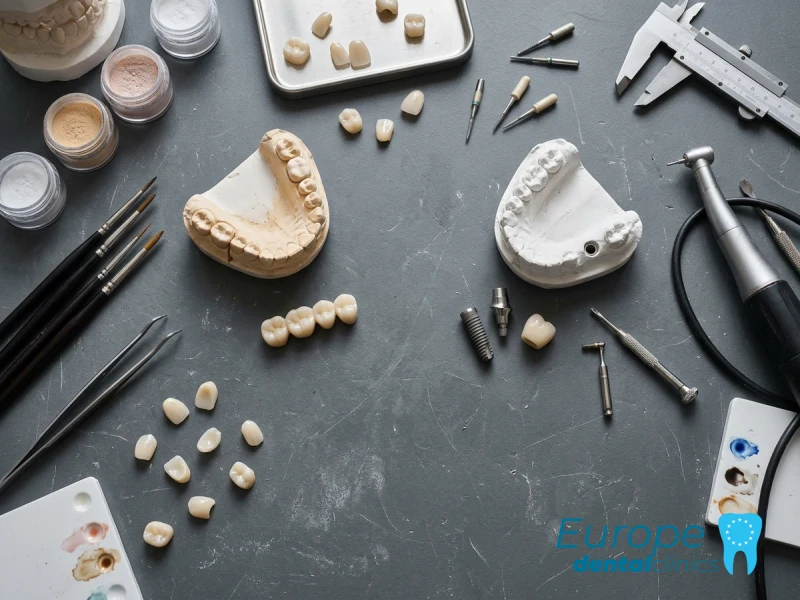
Dental Bridges Versus Implants: Choosing How to Replace Missing Teeth
Dental bridges and dental implants can both replace missing teeth, restore chewing and improve the appearance of your smile. The right choice depends on your remaining teeth, gum health, jawbone, medical history and priorities.
For European patients considering treatment in Istanbul, Turkey, the decision also involves travel, healing time and access to follow-up care. A treatment that appears convenient during one visit may require further appointments or maintenance after you return home.
This guide explains how the options differ, starting with what each treatment involves and the factors your dentist should assess before recommending either approach.
How a Dental Bridge Replaces Missing Teeth
A dental bridge holds one or more replacement teeth across a gap. A conventional bridge usually relies on crowns fitted over neighbouring teeth, which support the replacement tooth between them.
Preparing those supporting teeth involves removing tooth tissue. This may be reasonable when they already have large fillings or need crowns, but deserves careful consideration when they are healthy.
Adhesive bridges offer another approach
An adhesive, or resin-bonded, bridge attaches to a neighbouring tooth using a supporting wing. It often requires less preparation, although suitability depends on the position of the gap and your bite. Debonding is a possible complication.
Explore our dental treatment options, discover our clinic locations and meet our dentists for further information.
How a Dental Implant Supports a Replacement Tooth
A dental implant is a fixture placed surgically in the jawbone. After assessment and an appropriate healing period, it can support a crown. Multiple implants can also support a bridge when several teeth are missing.
Implants usually avoid preparing adjacent teeth. However, they require surgery, adequate bone and a commitment to cleaning and professional maintenance. Some patients need bone grafting before or alongside implant placement.
Healing commonly takes several months. Immediate temporary teeth are possible in selected cases, but they should never be assumed suitable before examination.
Factors That Influence Suitability
A dentist should examine your teeth, gums and bite, review your medical history and take appropriate imaging. Implant planning may require a three-dimensional scan when clinically justified.
- Neighbouring teeth: heavily restored teeth may favour a conventional bridge in some circumstances.
- Bone and gum health: active disease needs treatment before replacement options proceed.
- Smoking and diabetes: smoking and poorly controlled diabetes can increase implant complications.
- Growth and medicines: implants are generally delayed until jaw growth is complete; certain medicines require additional assessment.
Risks and Alternatives to Discuss Before Consent
Bridges can develop decay around supporting teeth, fracture or lose retention. Prepared teeth may later need root canal treatment. Implants can fail to integrate, develop inflammation and bone loss around them, or experience mechanical problems.
Neither option lasts indefinitely or comes with a guaranteed outcome. Alternatives include a removable partial denture, an adhesive bridge where suitable, or accepting the gap when function and dental health allow.
Informed consent means understanding these alternatives, likely maintenance and the consequences of treatment before agreeing to irreversible work.
Planning Treatment in Istanbul and Follow-up at Home
Before booking flights, request a provisional treatment plan and clarify which decisions require an examination in person. Ask about appointments, healing intervals, temporary teeth and arrangements if complications develop after departure.
Obtain written costs and aftercare arrangements, including who provides urgent care and whether returning to Turkey could be necessary.
Comparing the Full Cost of Bridges and Implants
Compare quotations for the same clinical work. An implant quotation may list the fixture, connecting abutment and final crown separately. A bridge quotation should identify how many units are included, including replacement teeth and supporting crowns.
Check whether diagnostic imaging, temporary restorations, laboratory work and adjustments are included. Add accommodation, flights and time away from work to your budget. Long-term costs can include replacing worn restorations or repairing damaged components.
Appearance and Comfort in Everyday Use
Both treatments can look natural when the restoration matches neighbouring teeth in shape, colour and proportion. The gum contour also matters, particularly where a missing front tooth is visible when you smile.
After tooth loss, the ridge beneath the gap may shrink. A bridge tooth may need shaping to disguise this change, while an implant crown can also present aesthetic challenges if gum or bone volume is limited.
Reviewing the planned appearance
Ask to review the proposed tooth shape and shade before the final restoration is fitted. A temporary restoration or mock-up may help assess appearance and speech, although neither guarantees the final result.
Cleaning Around a Bridge or Implant Crown
Daily cleaning differs because replacement teeth create surfaces that a standard toothbrush cannot fully reach. Brush twice daily with fluoride toothpaste and ask your dental team to demonstrate cleaning around your particular restoration.
For a bridge, a floss threader, specialist floss or a suitable interdental brush can clean beneath the replacement tooth. Around an implant crown, interdental brushes may help clean the spaces beside it; the size should suit the available space.
Bleeding during cleaning deserves assessment if it persists. Avoid stopping cleaning altogether, as plaque accumulation can worsen inflammation.
Eating and Managing the First Days After Treatment
Wait until local anaesthetic has worn off before chewing to reduce the risk of biting your cheek or tongue. Follow instructions about when you can eat after cementation or surgery, because these depend on the treatment and materials used.
After implant surgery, choose softer foods initially and avoid pressure on the treated area as advised. Take prescribed medicines according to the instructions and avoid disturbing the wound.
A restoration that feels too high when you bite needs adjustment. Contact the treating dentist instead of waiting for persistent discomfort to settle.
Recognising Problems That Need Prompt Attention
Seek dental advice for increasing pain, pus, a loose restoration or swelling that worsens after initially improving. An implant crown that moves may have a loose component and needs assessment before further chewing damages it.
Difficulty breathing or swallowing, or rapidly spreading swelling, requires emergency medical care. Persistent bleeding after surgery also needs urgent advice.
Keeping Records for Care Across Borders
Request copies of relevant radiographs, treatment notes and details of the restoration materials. For implants, retain the manufacturer, implant system, dimensions and component information: another dentist may need these to identify compatible parts.
Keep the clinic’s contact details accessible and share the records with your dentist at home. Confirm whether that dentist can maintain the proposed restoration before treatment begins.
Understanding Longevity and Published Success Rates
When comparing dental bridges versus implants, treat lifespan figures as estimates rather than expiry dates. Research follows different patient groups, restoration designs and definitions of success, so percentages from separate studies may not be directly comparable.
An implant remaining in the jaw does not necessarily mean its crown has needed no repairs. Similarly, a bridge may remain functional after treatment to a supporting tooth. Ask what any quoted figure measures and which complications it excludes.
How Teeth Grinding Affects Treatment Design
Grinding or clenching places additional forces on teeth and restorations. These forces can contribute to chipped ceramic, loose screws or fractures. Your dentist should assess signs of wear, previous breakages and symptoms involving the jaw muscles.
A protective night guard may be recommended after treatment. It can help manage mechanical loading, although it does not eliminate grinding or remove every risk. The restoration’s shape and the distribution of biting forces also need careful planning.
Replacing Several Teeth Changes the Comparison
A long gap requires a different assessment from a single missing tooth. The number, position and condition of available supports influence whether a bridge can carry chewing forces predictably. Simply extending a conventional bridge is not always appropriate.
Implants do not always replace teeth individually
An implant-supported bridge can replace several teeth using fewer implants than the number of missing teeth. The arrangement depends on anatomy and loading. Ask your dentist to explain how the proposed supports will carry the restoration and allow access for cleaning.
Considering Options When Bone Is Limited
If bone volume is reduced, ask whether grafting is essential for the proposed implant position and what benefit it offers. Grafting adds another procedure and can involve discomfort, infection, wound opening or failure to achieve sufficient bone.
Selected patients may be suitable for shorter implants or a different restorative design. These approaches have their own limitations and require individual assessment. A surgical plan should explain why the chosen approach is appropriate for the site.
Checking Clinical Responsibility at an Istanbul Clinic
Establish who will assess you, perform surgery and fit the final restoration. These tasks may involve different clinicians. Request their names, professional registration details and relevant experience, and check information through appropriate official channels where possible.
Consent discussions should take place in a language you understand. If an interpreter is needed, clarify who will provide one. You should have time to consider changes to the plan after examination, particularly if additional irreversible treatment is proposed.
Building Flexibility Into Your Travel Arrangements
Avoid an itinerary that depends on every appointment proceeding without delay. Laboratory adjustments, tissue changes or an unexpected clinical finding can alter the schedule. Allow time for the dentist to assess the restoration before your departure.
Travel insurance often excludes planned dental treatment and related complications. Read the policy wording and obtain written clarification from the insurer. European reciprocal healthcare arrangements do not fund planned private dental treatment in Turkey; check your particular entitlement separately when arranging travel cover.
Planning Around a Tooth That Still Needs Removing
If the affected tooth is still present, first establish whether it can be saved predictably. A replacement plan should follow an assessment of its remaining structure, root condition and supporting tissues. Depending on the diagnosis, restorative treatment or specialist assessment may be appropriate before extraction.
Once extraction is necessary, its timing can influence the replacement pathway. An implant can sometimes be placed at the extraction appointment, but infection, socket anatomy and the ability to achieve initial stability affect that decision.
Managing the Gap During Treatment
A visible gap can affect confidence and work commitments while treatment progresses. Possible temporary options include a removable tooth, a clear retainer containing a replacement tooth or a temporary fixed restoration, depending on the clinical situation.
Ask how the temporary option will look, whether it can be removed and which eating restrictions apply. A temporary tooth over an implant site must be designed to avoid harmful pressure during healing. Its appearance and function may differ from the definitive restoration.
Understanding How Replacement Teeth Feel
A natural tooth has a ligament around its root that helps detect pressure. An implant connects directly with bone and lacks this ligament, so the sensation of biting can differ. Patients can adapt, but an implant does not reproduce every feature of a natural tooth.
A conventional bridge receives some sensory feedback through its supporting teeth. With either option, the tongue may initially notice unfamiliar contours. Persistent food trapping or difficulty speaking should prompt a review of the restoration’s fit and shape.
Designing Restorations for Future Repairs
Access for maintenance deserves discussion before the final restoration is made. Implant crowns may be retained with a screw or cement, with different advantages and limitations. Screw access can facilitate removal, while its position may influence appearance and design.
A conventional bridge may need to be cut off if a supporting tooth requires certain treatments or the bridge cannot otherwise be removed safely. Ask how a future problem with one component could affect the rest of the restoration.
Accounting for Changes in Your General Health
Tell your dentist about planned medical treatment as well as current conditions. Cancer therapies, medicines affecting bone turnover and treatments that suppress immunity can influence surgical decisions and the management of later complications.
Provide an accurate medication list, including supplements and injections. Do not stop prescribed medicines yourself to prepare for dental treatment. Where necessary, the dentist should coordinate with your medical team to agree on appropriate precautions and timing.
Making a Choice That Fits Your Priorities
Ask for a written explanation of why each clinically suitable option fits your circumstances. Identify your priorities, such as avoiding surgery, preserving tooth tissue or limiting treatment time. These preferences help guide a shared decision.
If the recommendation involves removing several teeth or preparing otherwise sound teeth, an independent second opinion can clarify the trade-offs. You can pause before elective treatment, particularly when the proposed plan changes substantially after your arrival in Istanbul.
Frequently asked questions
What is the main difference between a dental bridge and an implant?
A bridge replaces a missing tooth with an artificial tooth supported by neighbouring teeth or implants. A dental implant is a titanium post placed in the jawbone, usually topped with a crown.
How do bridges and implants affect neighbouring teeth?
A conventional bridge usually requires the teeth on either side of the gap to be reshaped for crowns. A single implant generally leaves neighbouring teeth untouched, which can be an advantage when they are healthy.
Which treatment takes longer?
A conventional bridge can often be fitted over a few appointments within several weeks. Implant treatment commonly takes several months because the post needs time to integrate with the jawbone; bone grafting can add further time.
Does getting a bridge or an implant involve surgery?
A conventional bridge normally involves preparing the supporting teeth and does not require implant surgery. An implant requires a surgical procedure to place the post in the jawbone, usually under local anaesthetic.
How long do dental bridges and implants last?
Both can last for many years with good care. A bridge often lasts around 10 to 15 years, while an implant can last longer, although its crown may need replacement. Gum health, oral hygiene, smoking and grinding can affect their lifespan.
Which option costs more?
An implant often costs more initially than a bridge, although prices vary with the number of teeth being replaced and any extra treatment needed. Ask your dentist for a written estimate that includes consultations, scans, laboratory work and follow-up care.
Can everyone have a dental implant?
Not everyone is immediately suitable. Your dentist will assess your general health, gums and jawbone, and may recommend treating gum disease or considering a bone graft first. Smoking and some medical conditions can affect healing and the chance of success.
Which option helps preserve the jawbone?
An implant transfers chewing forces to the surrounding jawbone and can help maintain bone in that area. A conventional bridge rests above the gum and does not stimulate the bone beneath the missing tooth in the same way.
How do I clean a bridge or an implant?
Brush twice a day with fluoride toothpaste and clean around the restoration daily. A bridge also needs cleaning underneath the artificial tooth, often with floss threaders or an interdental brush. Your dental team can show you which tools fit your bridge or implant.
How do I decide between a bridge and an implant?
Discuss the condition of your neighbouring teeth, gum and bone health, treatment time and costs with your dentist. A bridge may be appealing if adjacent teeth already need crowns, while an implant may suit someone who wants to preserve healthy neighbouring teeth.
