


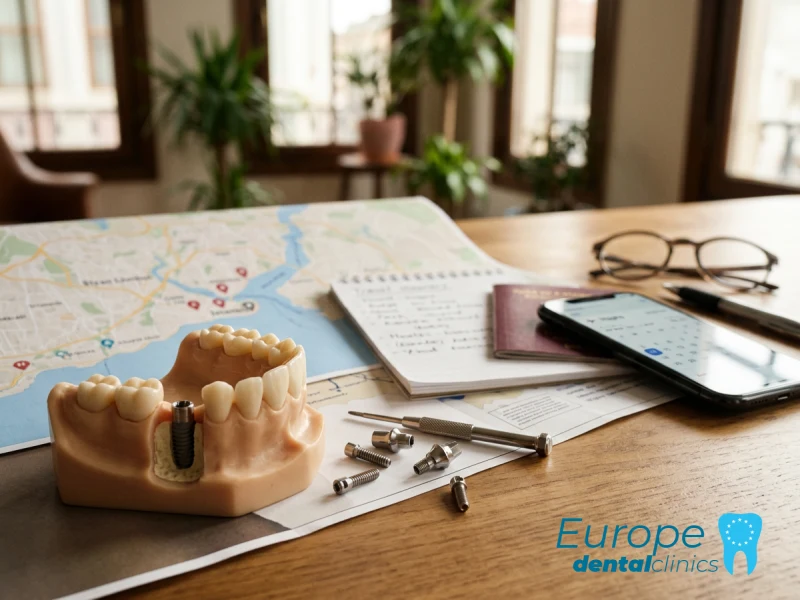
Dental tourism in Istanbul requires planning that connects clinical care with travel, recovery and support after you return home. For European patients, the decision should start with the condition of their teeth and the treatment they need. Flight availability, accommodation and package offers come later.
This guide begins with the checks to make before booking, so you can compare providers, understand your options and leave enough time for informed decisions.
Start with a dental assessment at home
Arrange an examination with a dentist before committing to treatment abroad. Ask about decay, gum health, existing restorations and any symptoms that need investigation. This gives you a useful starting point when discussing proposals with clinics in Istanbul.
Photographs and scans sent online can support an initial discussion, but a remote quotation remains provisional. An examination, and X-rays where clinically justified, may change the recommended treatment or its timing.
Explore our dental treatment options, discover our clinic locations and meet our dentists for further information.
Understand your treatment options and alternatives
A treatment plan should explain the problem being addressed, the proposed procedure and reasonable alternatives. Healthy tooth tissue matters: veneers and crowns can involve irreversible preparation, while whitening, orthodontics or composite bonding may suit some cosmetic concerns.
Match the procedure to your clinical needs
Dental implants require assessment of bone, gum health and relevant medical conditions. Active gum disease usually needs treatment first. Keeping a restorable natural tooth, choosing a bridge or wearing a removable denture may also be appropriate.
Ask what could happen if you postpone treatment. Understanding urgency helps you distinguish necessary care from optional changes to your smile.
Check the dentist and clinic before paying
Request the treating dentist’s full name, professional registration details and relevant experience. Check credentials through appropriate Turkish authorities where possible, and establish who will perform each stage of care.
Reviews and photographs provide limited evidence of clinical quality. Ask how the clinic handles infection prevention, medical emergencies, complaints and complications. Confirm that you can communicate directly with the clinician in a language you understand.
Build a realistic treatment and travel timetable
Plan your stay around clinical appointments, laboratory work and review visits. Avoid assuming that every procedure can be completed safely within a short holiday.
Implant treatment may require separate trips because healing between stages can take months. Extractions, grafting or unexpected findings may extend the schedule. Ask your dentist when flying is appropriate for your procedure and health, and choose flexible bookings where practical.
Review costs and consent without pressure
Request a written, itemised quotation covering examinations, imaging, temporary restorations, laboratory work, medicines and review appointments. Clarify which travel expenses are included and what happens financially if the plan changes.
Informed consent should include benefits, limitations, alternatives and risks such as sensitivity, infection, bite problems, nerve injury or restoration failure, according to the procedure. Allow time to consider this information before irreversible treatment begins.
Arrange aftercare before leaving for Istanbul
Ask for written recovery instructions, an emergency contact and a clear follow-up schedule. Establish who will assess problems once you are home and who pays for remedial care, additional flights or accommodation.
Check travel insurance exclusions: routine policies may exclude planned dental treatment and related complications. Arrange access to dental care at home, and request copies of your records, imaging and material details. These documents help another dentist understand and manage your treatment.
Prepare your medical information and medicines
Give the clinic an accurate medical history, including allergies, previous reactions to anaesthetics, pregnancy, diabetes and any conditions affecting healing. Include prescribed medicines, supplements and recreational drug use, as these can influence treatment safety.
Never stop prescribed medication yourself, particularly blood thinners. Any adjustment should be agreed with the prescribing clinician and treating dentist. Carry essential medicines in your hand luggage, in their original packaging, and check Turkish entry requirements for controlled medicines before travelling.
Choose accommodation that supports recovery
Prioritise a quiet room with straightforward access to the clinic, drinking water and suitable food. Istanbul traffic can make journeys unpredictable, so consider the actual route between your accommodation and appointments when choosing where to stay.
A lift may help if you feel tired after treatment. Access to a fridge can make storing soft foods easier. Confirm whether you can extend your stay if recovery or an adjustment appointment takes longer than expected.
Plan support for sedation and the first night
If your procedure involves sedation or general anaesthesia, ask about fasting, escort requirements and supervision afterwards. Instructions depend on the technique used and your medical circumstances.
You may need a responsible adult to take you back to your accommodation and remain with you. A taxi driver or hotel receptionist cannot replace this support. Follow the clinic’s restrictions on driving, alcohol, operating machinery and making important decisions after sedation.
Adapt meals and sightseeing to your procedure
Keep the first days flexible
Leave space in your itinerary for rest. After oral surgery, strenuous exercise, heavy lifting and prolonged time in hot environments may worsen bleeding or swelling. Follow instructions tailored to the procedure rather than treating general recovery advice as a fixed timetable.
While your mouth is numb, avoid hot drinks and take care not to bite your cheek or tongue. Depending on treatment, comfortable options may include yoghurt, scrambled eggs and lukewarm soup. Ask when you can resume firmer foods and chew on the treated area.
Recognise symptoms that need prompt assessment
Some soreness, bruising or swelling can occur after invasive treatment, but the expected pattern should be explained before you leave the clinic. Worsening symptoms deserve assessment, especially increasing pain after initial improvement, fever, pus or persistent bleeding.
Difficulty breathing or swallowing, rapidly spreading swelling, or severe bleeding requires emergency help. In Turkey, call 112 for emergency assistance. Seek urgent care locally if needed; waiting for a reply from your treating clinic may delay necessary treatment.
Protect healing during the journey home
Once your clinician has confirmed you are fit to travel, keep any necessary pain relief, gauze and care instructions accessible during the journey. Take medicines only as directed, and check whether they cause drowsiness before travelling alone.
Drink water regularly and choose food you can manage comfortably. Continue gentle cleaning according to your instructions, including during travel days. Smoking and vaping can impair healing, particularly after extractions and implant surgery; ask for practical support with stopping before treatment begins.
Understand temporary teeth and staged treatment
Temporary crowns, bridges or dentures may protect prepared teeth and maintain appearance while definitive restorations are made or tissues heal. Their strength, fit and cleaning requirements can differ from those of the final restoration.
Ask how long you are expected to wear them and what to do if they loosen or break. Avoid repairing them with household glue. With implant treatment, a fixed temporary bridge does not necessarily mean the implants are ready for normal chewing forces.
Take an active role in the fitting appointment
Assess comfort, speech and appearance
Before final restorations are permanently fitted, ask which features you can assess at a trial stage. Depending on the procedure, this may include tooth shape, shade, length and how the teeth meet.
Describe specific concerns: a tooth touching first, difficulty pronouncing certain sounds, or an edge catching your lip. A comfortable bite matters alongside appearance. Persistent discomfort should be investigated rather than assumed to be an unavoidable part of adjusting.
Check the proposed shade under different lighting where possible. Photographs on a phone can alter colour, so they should support the discussion rather than determine your decision alone.
Clarify material choices and laboratory involvement
Terms such as “premium porcelain” provide little useful detail without the material’s name and intended use. Ask why the proposed ceramic, metal alloy or composite suits the tooth, available space and expected biting forces.
No restorative material is ideal for every situation. Ceramics can chip or fracture, and some designs require more tooth preparation than others. If you grind your teeth, discuss how this affects the design and whether a protective appliance may be appropriate.
Read repair policies beyond the headline warranty
A clinic’s warranty is a contractual promise with specific conditions, rather than proof that a restoration cannot fail. Ask which events qualify for repair or replacement and whether the policy covers the dentist’s work, laboratory materials or both.
Look for exclusions involving grinding, smoking, missed maintenance or treatment by another dentist. Establish whether an independent assessment is accepted and what happens if the original clinician leaves the practice. Keep the policy version supplied when you agree to treatment.
Manage payments and changes to the agreement
Before transferring a deposit, identify the legal business receiving payment and check that its details match your documentation. Obtain receipts and understand cancellation terms, refund conditions and any currency conversion charges.
If an examination leads to additional proposed work, request a revised written plan before agreeing. You can ask for time to consider a substantial change or seek another opinion. Money already spent on travel should not determine whether you accept an irreversible procedure.
Set boundaries around photography and marketing
Clinical photographs can help document treatment and communicate with a dental laboratory. Public use on websites or social media is a separate matter and should involve clear, specific permission.
Ask whether your face, name or other identifying details will appear, and how to withdraw permission for future promotional use. Read consent documents carefully, particularly when photography permission is bundled with treatment paperwork or linked to a discount.
Establish a cleaning routine for your new restorations
Crowns, veneers and implants still need daily care. Decay can develop where a crown meets a natural tooth, while plaque around implants can inflame the surrounding tissues. Brush twice daily with fluoride toothpaste and clean between teeth using tools selected for your restoration design.
Practise cleaning beneath bridges
Ask the dental team to demonstrate how to reach beneath a bridge using floss threaders or appropriately sized interdental brushes. Practise before your final appointment ends. A water flosser may help in some circumstances, but does not automatically replace other recommended cleaning methods.
Allow time to assess the settled result
Gums and lips may look different immediately after treatment because of swelling or irritation. Speech can also take time to adapt to changes in tooth shape. Ask which changes should settle and when the result can reasonably be assessed.
Persistent problems need a clinical review. Food repeatedly trapping in one area, floss shredding against a restoration or difficulty closing your teeth comfortably can indicate an issue requiring attention. Record when symptoms occur so you can describe them accurately.
Understand complications that can appear later
Some problems develop after an initially comfortable recovery. A prepared tooth may later develop pulp inflammation and require root canal treatment. Gum recession can expose restoration margins, while implant complications may affect either the surrounding tissues or components such as screws.
These possibilities make long-term maintenance relevant even when the immediate result looks satisfactory. The absence of pain does not establish that every tooth or implant is healthy; routine examinations help identify changes that you may not notice yourself.
Protect your teeth during sport and sleep
If you play contact sports, ask when you can resume and whether your existing mouthguard still fits after treatment. A poorly fitting guard may press against new restorations or healing tissues. Arrange assessment before using it again.
Similarly, an existing retainer or night guard may need adjustment or replacement. Do not force an appliance over teeth whose shape has changed. If orthodontic retention is interrupted, obtain advice promptly because teeth can move during the gap in wear.
Understand how cross-border complaints work
Resolving a dispute abroad can involve different legal procedures, languages and professional bodies from those at home. Identify the clinic’s formal complaints route and the relevant Turkish authority for your concern. European consumer protections do not necessarily apply in the same way to treatment purchased in Turkey.
Keep correspondence factual and preserve dated photographs, receipts and clinical assessments. If you seek compensation, independent legal advice may help establish jurisdiction, evidence requirements and applicable deadlines. A professional complaint and a financial claim may follow separate processes.
Measure success through function and oral health
A useful outcome includes comfortable chewing, manageable cleaning, stable gum health and an appearance you have agreed with your dentist. A dramatic colour change alone provides little information about these features.
Dental tourism requires an ongoing commitment. Include maintenance in your plans from the outset, and reassess any future cosmetic work against the health of your remaining teeth and your experience of the first treatment.
Frequently asked questions
How should I choose a dental clinic in Istanbul before booking my trip?
Check that the clinic and treating dentist are registered with the relevant Turkish authorities, and ask whether the provider holds any authorisation required to treat international patients. Request the dentist’s qualifications, experience with your proposed procedure, and details of the clinic’s infection control arrangements. Read independent reviews, but also ask for a written treatment plan explaining the diagnosis, alternatives, risks and aftercare. An independent dental opinion at home can help you assess the proposal.
What information should I send the dentist before travelling?
Share your medical history, current medicines, allergies and details of previous dental treatment. Send recent dental X-rays or scans if you have them, using the clinic’s secure transfer method. Explain your symptoms and goals clearly. A remote assessment can support initial planning, but the dentist may need to revise the treatment plan after examining you in person and taking any necessary images.
How many days should I allow for dental treatment in Istanbul?
Your stay should reflect the procedure, the number of appointments and the time needed for checks or adjustments. Some treatments may fit into a short visit, while crowns, veneers or extensive restorative work can require several appointments. Dental implants often involve separate trips with a healing period between stages. Ask for a proposed appointment schedule and leave spare time before departure for unexpected delays or follow-up care.
What should a dental tourism quotation include?
Request an itemised quotation stating the teeth involved, procedures, materials, laboratory fees, imaging, anaesthesia and temporary restorations. Check whether medicines, transfers, accommodation and follow-up appointments are included. Ask what happens if an examination reveals additional treatment needs, which currency applies, and how deposits, cancellations and refunds work. Compare the full cost of treatment and travel, including any return visits.
What travel documents and insurance should I arrange?
Check Türkiye’s current entry requirements for your nationality, including passport validity and whether you need a visa, through official government sources. Read your travel insurance policy carefully because planned dental treatment and complications arising from it are often excluded. Ask insurers specifically about cover for treatment complications, extra accommodation, changes to flights and emergency care. Obtain written confirmation of any relevant cover.
Where should I stay, and how should I travel to appointments?
Choose accommodation with a practical journey to your clinic, as Istanbul’s traffic can make apparently short trips lengthy. Confirm which airport you will use: Istanbul Airport and Sabiha Gökçen Airport serve different parts of the city. Ask whether transfers are included and who operates them. For appointments involving sedation, arrange an escort and transport according to the clinic’s instructions, as travelling alone afterwards may be unsuitable.
How should I prepare medically before my dental trip?
Ask the treating dentist for instructions tailored to your procedure and health conditions. Discuss diabetes, bleeding disorders, heart conditions, pregnancy and any medicines that affect bleeding or healing. Do not stop prescribed medicines without advice from the clinician responsible for them. If sedation or general anaesthesia is planned, confirm fasting requirements, escort arrangements and any tests needed before travelling.
Can I combine dental treatment in Istanbul with sightseeing?
You may be able to enjoy gentle sightseeing around appointments, depending on your treatment and recovery. Schedule demanding activities before treatment where practical, and keep the period afterwards flexible. Surgery may require rest and restrictions on exercise, smoking, alcohol or certain foods. Follow your dentist’s advice and allow time for review appointments before committing to excursions.
How soon can I fly home after dental treatment?
The appropriate timing depends on the procedure, your recovery and whether complications occur. Extractions, implant surgery, sinus procedures and sedation can each affect travel advice. Ask your dentist to recommend a departure date and assess you before you leave. Avoid booking your return flight so tightly that there is no time to manage bleeding, swelling, pain or problems with your bite.
What aftercare arrangements should I make before leaving Istanbul?
Obtain your treatment records, relevant X-rays, material or implant details, prescriptions and written aftercare instructions in a language you understand. Confirm how to contact the clinic, who will assess problems once you are home, and what any guarantee covers, including travel costs and exclusions. Arrange appropriate follow-up with a dentist at home. Seek urgent local care for uncontrolled bleeding, rapidly increasing swelling, fever, or difficulty swallowing or breathing.
