


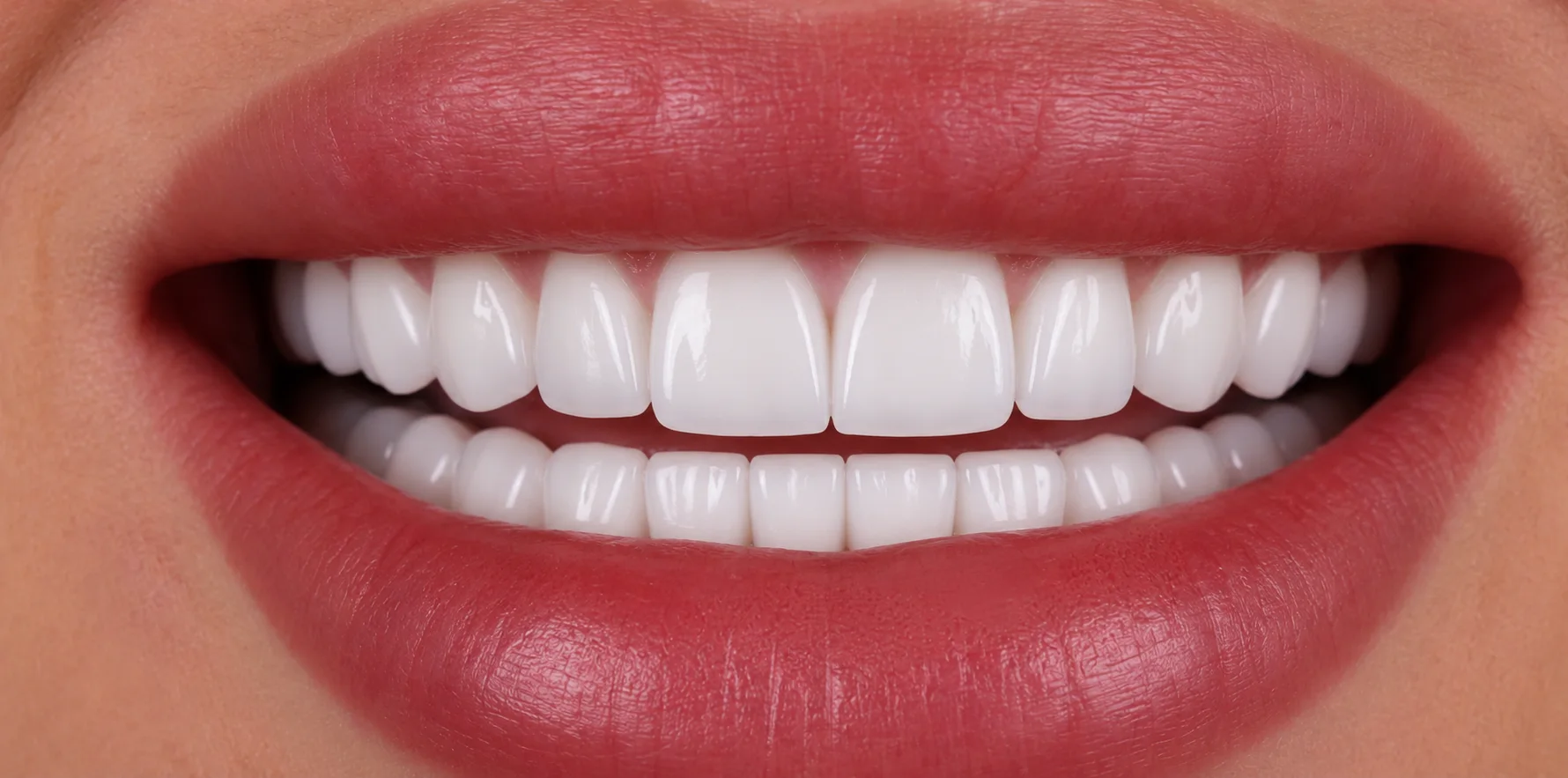
A Hollywood smile in Istanbul usually means a cosmetic dental plan designed to change the colour, shape and overall appearance of your teeth. It may involve veneers, crowns, whitening or orthodontics. The term describes an aesthetic goal rather than a recognised dental procedure, so the treatment behind it can vary considerably.
For European patients considering Turkey, the central question is which approach can achieve the desired improvement while preserving healthy tooth structure. Understanding the differences between veneers and crowns is an essential starting point.
What Does a Hollywood Smile Involve?
A smile makeover should begin with an assessment of your teeth, gums, bite and expectations. Your dentist should consider existing fillings, decay, gum disease, tooth wear and any history of grinding before recommending cosmetic treatment.
Some patients want subtle changes to a few teeth; others seek a broader transformation. There is no standard number of teeth that must be treated. A personalised plan should explain why each proposed restoration is needed.
Choosing a Natural Appearance
Tooth shade, length, shape and surface texture all influence the result. Very bright, uniform teeth may suit your preferences, but they are not a requirement. Discuss photographs, a diagnostic mock-up or temporary restorations to help communicate your goals.
Veneers in Istanbul: What They Can Change
Dental veneers cover mainly the front surface of a tooth. They can improve selected problems involving colour, shape, small gaps or minor irregularities in otherwise suitable teeth.
Ceramic veneers usually require some enamel removal, although the amount varies. Preparation is generally irreversible. Suitable cases may need very little preparation, but “no-prep” veneers are not appropriate for everyone and can look bulky if poorly selected.
Ceramic Veneers and Composite Bonding
Ceramic veneers are made outside the mouth and bonded to the teeth. Composite bonding uses tooth-coloured resin shaped directly onto the tooth. Bonding can sometimes preserve more tooth structure and is often easier to repair, although it may stain or wear sooner.
Dental Crowns: When More Coverage Is Appropriate
A dental crown covers most or all of the visible tooth above the gum. Crowns may be appropriate for teeth weakened by large fillings, fractures or extensive decay. Some root-treated teeth also need protective coverage, depending on their position and remaining structure.
Preparing a crown usually removes more tooth tissue than preparing a veneer. Crowning healthy teeth solely to change their appearance therefore requires careful justification and discussion of less invasive options.
Material Names Do Not Explain the Whole Treatment
Terms such as zirconia and lithium disilicate describe materials, rather than the extent of preparation. Ask whether the proposed restoration is a veneer or a crown, how much tooth will be removed, and why that design suits your circumstances.
Who Is Suitable for Veneers or Crowns?
Healthy gums, controlled decay and reliable daily cleaning provide the foundation for cosmetic dentistry. Your dentist may need to stabilise dental disease before proceeding. Significant crowding, bite problems or grinding can also change the recommended plan.
Alternatives may include whitening, orthodontics, composite bonding or accepting your existing appearance. Whitening changes colour without reshaping teeth, while orthodontics can improve alignment without covering healthy tooth surfaces.
Risks and Informed Consent Before Treatment
Possible complications include sensitivity, gum irritation, chipping, loosening and decay around restoration margins. Tooth preparation can occasionally lead to persistent pain or a later need for root canal treatment. Veneers and crowns require maintenance and may eventually need replacement.
Informed consent should cover these risks, alternatives, expected limitations and the consequences of irreversible preparation. You should have time to consider a written treatment plan in a language you understand, without pressure to agree immediately.
Planning Travel and Follow-up From Europe
Before booking flights, confirm the anticipated appointments, laboratory stages and arrangements if treatment takes longer than expected. Photographs can support an initial discussion, but they cannot replace a clinical examination and any necessary imaging.
Request written aftercare instructions, copies of your records and a clear contact for complications. Establish who will provide reviews after you return home and who pays for repairs, additional treatment or repeat travel.
Frequently Asked Questions About Hollywood Smile Treatment
Can I Choose Veneers Instead of Crowns?
Your preference matters, but suitability depends on the condition of each tooth. Ask your dentist to explain the recommendation tooth by tooth.
What Should a Consultation in Istanbul Cover?
A useful consultation should be a clinical conversation, not simply a choice of tooth colour or a discussion of photographs. The dentist should ask about your medical and dental history, medicines, allergies, previous treatment, sensitivity and habits such as clenching or grinding. Tell them about relevant health conditions and any dental work already planned at home.
What Records Should the Clinic Take?
The assessment may include an examination of your teeth and gums, photographs, bite assessment and dental imaging when clinically indicated. Ask what each image is intended to assess and how the findings affect the plan. Imaging should be selected for your individual needs rather than presented as an automatic requirement for every patient.
Request a written treatment plan that identifies the teeth to be treated and the proposed restoration for each one. It should distinguish necessary treatment for disease or damage from elective cosmetic changes. If a recommendation changes after examination, ask what new finding led to the change and whether you can take time to consider it.
How Can You Judge a Treatment Proposal?
Look for clear explanations rather than pressure to decide quickly. The dentist should be willing to discuss what happens if you choose a more conservative option, delay treatment or proceed with only some of the proposed work. You can ask for the plan and relevant records in a form you can share with your regular dentist.
- Ask what is reversible. Find out which steps permanently alter a tooth and whether a temporary or additive option is suitable.
- Ask about bite and gum health. Cosmetic changes should be considered in relation to how your teeth meet and the condition of the surrounding tissues.
- Ask what is included. Clarify the stages, materials, laboratory work, reviews and any possible additional treatment.
- Ask about maintenance. Request practical advice on cleaning, night guards if relevant, and how the clinic handles a damaged or uncomfortable restoration.
Before-and-after images can help explain a style, but they do not predict your result. Check that examples are presented with the patient’s permission and that the cases are comparable to your own. Celebrity treatment claims should not be treated as verified unless there is reliable confirmation; a clinic’s marketing alone may not establish that a named person had a particular procedure.
Why Can a Temporary Stage Matter?
Depending on the treatment, you may wear temporary restorations while permanent ones are made. Temporaries can protect prepared teeth and give you an opportunity to comment on appearance or comfort, but they are not a guarantee of how the final restorations will look or feel.
Agree in advance how you can raise concerns before final bonding or fitting. Discuss whether changes are possible at that stage, who assesses them and whether extra time would affect your travel arrangements. Do not assume that every requested change can be made immediately or without affecting the plan.
What Should You Check Before Final Fitting?
At the appointment, speak up if a restoration feels too high when you bite, has a rough edge or causes notable discomfort. Ask the dentist to check your bite and explain the final cleaning routine. Keep copies of the names and details of the restorations, together with any instructions for future dental care.
How Should You Plan the Journey Home?
Build flexibility into your itinerary. A schedule that leaves no time for a review or an adjustment can make it harder to deal with an unexpected delay. Ask the clinic how many visits are anticipated, what would happen if a temporary restoration came loose, and what arrangements are available outside normal appointment hours.
Check travel insurance terms carefully. Do not assume that a standard policy covers planned dental treatment, complications or extra travel. Keep the clinic’s contact details and your treatment documents accessible during the journey. If you have a dentist at home, consider arranging how records can be shared with them.
What Aftercare Should You Expect?
Follow the clinic’s instructions for brushing, interdental cleaning and any recommended review. A restoration does not prevent gum disease or decay in the remaining tooth, so ongoing oral hygiene and routine dental care still matter. Ask whether any foods or activities should be avoided temporarily and for how long, based on the treatment you received.
Contact a dental professional promptly if you develop severe or worsening pain, swelling, a restoration that feels loose, or difficulty biting. If you have breathing or swallowing difficulties or rapidly increasing facial swelling, seek urgent medical care. For less urgent concerns after returning to Europe, ask the Istanbul clinic how it will advise your local dentist and what records it can provide.
Questions to Ask Before You Agree
- Which teeth are being treated, and what is the reason for each restoration?
- What alternatives would preserve more natural tooth structure?
- What are the likely limitations and possible complications in my case?
- Who will perform each stage, and who should I contact after I return home?
- Can I take the written plan away and seek an independent opinion before deciding?
A considered decision should leave you understanding the proposed work, its trade-offs and the practical arrangements for care after treatment. If important details remain unclear, pause and ask for an explanation before consenting.
How Do Veneers and Crowns Affect the Long-Term Plan?
Cosmetic restorations become part of your ongoing dental care. They are not permanent replacements for natural teeth, and the tooth beneath a veneer or crown can still develop problems. Future treatment may be needed if a restoration wears, chips, comes loose or no longer fits well.
Ask what options might be available if a restoration needs repair or replacement. The answer depends on the condition of the tooth and the amount of healthy structure remaining. A veneer cannot always be replaced with another veneer; a tooth may eventually need a different restoration. Understanding this before treatment helps you weigh a change in appearance against the possibility of more extensive care later.
Why Does Preserving Tooth Structure Matter?
Natural enamel provides a durable surface for bonding. Once removed, it does not grow back. The amount of preparation influences what choices may remain if a restoration fails or needs renewal. Ask the dentist to show or describe the planned preparation and explain whether a less invasive design is feasible for each tooth.
There may be sound clinical reasons for a crown, particularly where a tooth is already substantially weakened. However, a uniform cosmetic result does not by itself explain why every tooth needs the same treatment. Individual teeth can have different needs, so the plan should account for their condition rather than apply one approach automatically.
How Can You Make Decisions About Appearance?
Describe what you would like to change in practical terms: for example, a particular tooth’s shape, a visible gap or uneven colouring. This can help distinguish your main priorities from details that may not need treatment. Bring reference images if useful, but discuss what is realistic for your own teeth, face and bite.
Ask about the proposed proportions and how the restorations will relate to your natural teeth. The colour of untreated teeth may influence the appearance of the finished work, especially if only some teeth are restored. If whitening is being considered, ask whether it should happen before the shade is selected; restorations do not whiten in the same way as natural enamel.
Can You Assess a Proposed Look Before Committing?
Ask whether a mock-up or another preview is appropriate. A preview can help you comment on shape, length and overall style, but it is an aid to discussion rather than a promise of the final result. Clarify what the preview involves, whether it changes your teeth, and how your feedback will be used.
Consider how the proposed design may feel as well as how it photographs. Teeth that appear very different from your current smile can take time to get used to. Tell the dentist if you have concerns about speaking, closing your lips comfortably or keeping the teeth looking proportionate.
What If You Feel Unsure During Treatment?
You can ask questions at each stage and request a pause to understand an unexpected change. Consent is an ongoing discussion, not just a form signed before an appointment. If you do not understand why a step is being proposed, ask for the explanation in plain language before proceeding.
Before treatment begins, make sure you know which decisions are still open to discussion and when they need to be made. For example, the choice of shade or contour may need to be agreed before a restoration is permanently bonded. Ask how the clinic records your preferences and what happens if you are dissatisfied with a provisional appearance.
What Records Are Useful for Future Dental Care?
Keep a copy of the treatment plan, consent documents, invoices and any information supplied about restoration materials. Ask for relevant clinical records and images in a format that can be shared with a dentist elsewhere. These details may help another clinician understand what was done if you need an examination or repair later.
Note the date of treatment and the teeth involved. If a problem arises, describe when it began, what makes it better or worse, and whether the restoration feels different when you bite. Clear information can help a clinician assess the issue, but it cannot replace an examination.
How Do You Compare Treatment Plans Fairly?
When seeking another opinion, share the same dental records and ask the clinician to assess your teeth independently. Compare the reasoning, not just the number of restorations or the advertised result. Different recommendations may reflect different clinical findings, but you should be able to understand the basis for each proposal.
- Compare tooth-by-tooth explanations: note where clinicians agree or differ about the condition of individual teeth.
- Compare the extent of preparation: ask how much natural structure each option may remove.
- Compare future responsibilities: clarify how repairs, reviews and ongoing care would be arranged.
- Compare communication: consider whether your questions receive direct, understandable answers.
Frequently Asked Questions About Treatment Choices
Can Every Tooth Have the Same Type of Restoration?
Not necessarily. The condition, position and function of each tooth can differ. Ask why a particular restoration is proposed for each one rather than assuming a uniform smile design requires identical treatment.
Should I Decide on a Shade Before My Dental Assessment?
You can discuss the look you prefer, but the final choice should be made in context: the condition of your teeth, any planned whitening, the number of restorations and the design of your smile. Ask when the shade becomes final and whether you will be able to review it before placement.
How Can You Assess a Clinic Before Booking?
Research the clinic as well as the proposed treatment. Look for clear information about the treating dentist’s role, the location where care will take place and how to contact the practice. Where qualifications or professional registration are stated, check them through the relevant official body where possible. Ask who will examine you, who will prepare the teeth and who will fit the restorations; these may not necessarily be the same person.
Be cautious if you are offered a fixed treatment plan from photographs alone, or if you are asked to commit before a dentist has examined you. A remote discussion can help identify questions and arrange an appointment, but it cannot establish the full condition of your teeth and gums.
What Should You Ask About Clinic Standards?
Ask how the practice explains its cleaning and instrument-processing procedures, and what happens if you feel unwell during treatment. You can also ask how the clinic handles urgent concerns outside scheduled appointments. Clear answers help you understand the arrangements; promotional language alone does not establish the quality of care.
How Should You Handle Language and Communication?
Make sure you can understand discussions about diagnosis, options, risks and consent. If an interpreter is involved, ask who will provide interpretation and whether they will be available for clinical discussions, not only administrative arrangements. Do not sign a document you cannot understand; request an explanation or a translated version before agreeing.
Agree on a reliable way to contact the clinic after your appointment and check which language can be used. Keep written instructions and contact details somewhere accessible. If anything important is communicated verbally, ask for it to be confirmed in writing, especially changes to the treatment plan or arrangements for follow-up.
What Should You Check in the Treatment Agreement?
Read the documents carefully before paying a deposit or travelling. Confirm which services are planned, what may change after examination, and how consent will be obtained for additional treatment. Ask what the quoted fee includes and what circumstances could lead to extra charges. Do not assume that a package includes every review, repair or future replacement.
Check the clinic’s cancellation and refund terms, including what happens if you cannot travel or if the dentist decides the proposed treatment is unsuitable. If any part of the agreement is unclear, ask for clarification before accepting it. Keep copies of the agreement, payment records and correspondence.
How Can You Plan for Comfort and Accessibility?
Tell the clinic in advance if you have dental anxiety, a strong gag reflex, difficulty keeping your mouth open, mobility needs or another concern that could affect appointments. Ask what support is available and whether the planned appointment length is suitable for you. You should be able to discuss a signal for pausing treatment and ask for a break.
Do not assume that sedation or pain relief will be provided or appropriate. If either is proposed, ask who will assess you, what the option involves, what restrictions apply afterwards and whether you will need someone to accompany you. Follow the clinician’s individual instructions, including any advice about travel after treatment.
What If the Final Result Is Not What You Expected?
Raise concerns promptly with the treating dentist and explain the specific issue, such as discomfort, an unexpected shape or difficulty biting. Ask for an examination and a clear explanation of possible next steps. Avoid attempting to reshape, glue or adjust a restoration yourself, since this could damage it or the underlying tooth.
Before treatment, ask how concerns are formally recorded and who reviews them. Find out whether the clinic has a written process for responding to complaints, and whether that process applies to patients who have returned home. Keep copies of messages and appointment notes, and describe symptoms accurately rather than relying only on photographs.
What If You Need Care After Returning to Europe?
Arrange ongoing dental care with a local practitioner and explain what treatment you have received. If you develop a problem, contact a dentist for an assessment; the original clinic may be able to provide records or discuss the case, but remote advice cannot replace an examination. Clarify before travel who is responsible for organising and paying for care if an issue arises.
Seek prompt dental advice for persistent pain, swelling, a damaged restoration or a bite that feels markedly different. For rapidly worsening swelling, fever with facial swelling, or difficulty swallowing or breathing, seek urgent medical care. These symptoms require individual assessment rather than relying on messages or online guidance.
Frequently Asked Questions About Choosing a Clinic
Is a Video Consultation Enough to Approve Veneers or Crowns?
No. It can help you discuss goals and logistics, but a dentist needs to assess your mouth before confirming a suitable plan. The recommendation may change after examination.
Should I Book Travel Before the Treatment Plan Is Confirmed?
Consider waiting until you have had a meaningful clinical assessment and understand the likely appointments, alternatives and cancellation terms. Leave flexibility for changes and ask how the clinic handles delays or unexpected findings.
Explore related dental care and travel information
Learn more about dental treatment options, our clinic locations, and contacting our team before arranging care in Istanbul.
