


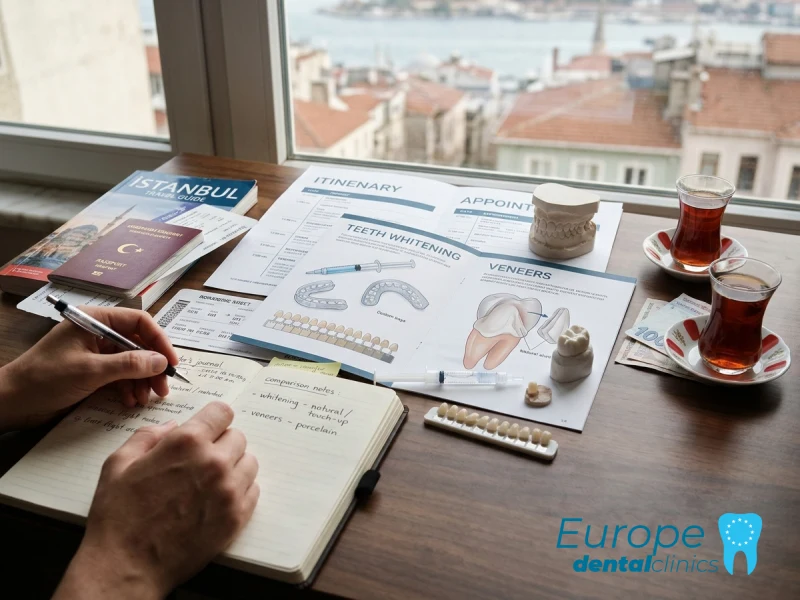
Teeth whitening versus veneers is a choice between changing tooth colour and covering the visible tooth surface. Whitening lightens natural teeth, while veneers can alter colour, shape and some minor irregularities. The right option depends on your enamel, existing restorations, oral health and priorities. For European patients considering treatment in Istanbul, understanding these differences before booking travel helps protect both your teeth and your budget.
Teeth Whitening Versus Veneers: The Main Difference
Teeth whitening uses peroxide gels to break down coloured compounds within natural teeth. It does not change tooth shape or position, and it will not lighten crowns, veneers or fillings.
Veneers are thin coverings bonded to the front of teeth. Usually made from ceramic or composite resin, they can mask discolouration and change tooth proportions. Many ceramic veneers require enamel removal, making treatment irreversible.
Explore our dental treatment options, discover our clinic locations and meet our dentists for further information.
When Teeth Whitening May Be Suitable
Whitening may suit people whose main concern is yellowing or general discolouration and whose teeth and gums are healthy. A dental examination should come first: decay, leaking fillings and gum inflammation may need treatment before whitening begins.
Professional Whitening Options
A dentist may offer supervised home whitening with fitted trays, treatment in the clinic, or a combination. Results vary with the cause of discolouration, the product and how it is used. A light or laser does not guarantee a better final result.
Some deep stains respond less predictably. Your dentist should explain likely limitations before you commit.
When Veneers May Be Considered
Veneers may be appropriate for selected teeth with persistent discolouration, small chips, uneven contours or minor spacing. They do not correct every alignment problem, and significant crowding or bite problems may be better managed with orthodontics.
Ceramic veneers generally resist staining better than composite, while composite veneers can often be repaired more easily. Neither lasts indefinitely. Suitability depends partly on available enamel, bite forces, tooth grinding and how much healthy tooth would need removing.
Risks and Alternatives to Discuss First
Whitening commonly causes temporary sensitivity and can irritate gums. Overuse or unsuitable products can increase harm, so follow your dentist’s instructions rather than extending treatment yourself.
Veneer risks include sensitivity, chipping, debonding, decay around the edges and possible future root canal treatment. Replacement can involve further tooth preparation. No-preparation veneers suit only selected cases and are not automatically reversible.
Alternatives include professional cleaning for surface stains, whitening alone, additive composite bonding, orthodontics or accepting the current appearance. Crowns involve more extensive tooth reduction and need a separate clinical justification.
Planning Dental Treatment in Istanbul
Before paying a deposit, request an itemised treatment proposal and identify the dentist responsible for your care. Photographs can support an initial discussion, but a remote assessment cannot replace an examination and any necessary radiographs.
Informed consent should cover alternatives, expected limitations, tooth preparation, complications and future maintenance in a language you understand. Allow time to consider the plan, particularly if the proposed treatment changes after arrival.
Aftercare, Travel and Follow-up
Confirm appointment numbers, review arrangements and whom to contact after returning home. Avoid assuming treatment will fit a short holiday. Whitening may need adjustments, while veneers require assessment of fit and bite. Maintain brushing with fluoride toothpaste and daily interdental cleaning. Ask about sensitivity management, grinding protection and costs for repairs, reviews or additional travel.
Matching Whitening Results to Existing Dental Work
If you have visible fillings or crowns, whitening can create a colour mismatch because these restorations retain their original shade. Your dentist may suggest whitening natural teeth first, then reassessing whether any visible restorations need replacing. Include that possibility in your treatment budget.
Before bonding new veneers or composite restorations, dentists commonly allow an interval after whitening for the shade to stabilise and to avoid interference with bonding. The timing depends on the whitening protocol and clinical assessment.
Assessing Veneer Shape Before Tooth Preparation
Diagnostic Mock-ups and Temporary Veneers
A diagnostic mock-up can help you assess proposed tooth length, contours and appearance in your own mouth. It may also reveal effects on speech or how your lips meet. Digital images offer useful previews, but cannot reproduce every feature of the finished result.
Where temporary veneers are used, report discomfort, difficulty cleaning or a bite that feels uneven. Agree how changes will be discussed before the final restorations are made. A preview is a planning tool, not a guarantee.
Comparing Costs Across the Full Treatment Plan
Compare written quotations for the same clinical work. A whitening quotation should identify whether trays, gel and reviews are included. For veneers, clarify the material, number of teeth, laboratory work, temporary restorations and any preparatory treatment.
For treatment in Turkey, calculate the total in your home currency, allowing for exchange rates, payment charges, accommodation and time away from work. Ask how unexpected treatment is authorised and charged. Future replacement costs also matter when comparing whitening with veneers over many years.
Checking Travel Cover and Patient Protections
Standard travel insurance may exclude planned dental treatment and related complications. Read the policy wording and obtain written clarification from the insurer. An EHIC or GHIC does not cover healthcare in Turkey; neither should be treated as insurance for a dental trip.
Check who your treatment contract is with, particularly when booking through an intermediary. Establish the complaints process, applicable terms and practical arrangements for resolving a problem from abroad. A warranty may have conditions and may exclude flights, accommodation or treatment by another dentist.
Recognising Problems That Need Prompt Assessment
Persistent or increasing pain, pain on biting, swelling or a loose veneer needs dental assessment. Do not assume these symptoms are a normal part of cosmetic treatment. If a veneer comes off, keep it safe and avoid household glue or attempts to rebond it yourself.
Rapidly spreading facial swelling, difficulty breathing or difficulty swallowing requires emergency care. Seek local help immediately instead of waiting to contact the overseas clinic or travelling back for an appointment.
Keeping Records for Care at Home
Request copies of your examination findings, relevant radiographs, consent documents and treatment summary. For veneers, ask for the teeth treated and materials used; for whitening, retain the product details and instructions.
Share these records with your regular dentist. Arrange continuing care before departure where possible, and clarify whether your home dentist can provide reviews or repairs and what separate fees may apply.
Understanding Why Teeth Look Darker
Tooth colour comes from both the outer enamel and the dentine beneath it. As enamel becomes thinner with age or wear, more of the naturally yellower dentine can show through. Whitening changes colour, but it cannot rebuild missing enamel or restore worn tooth edges.
Discolouration can also follow certain medicines, developmental changes or an injury. Identifying the cause helps your dentist judge whether bleaching is likely to produce an even result.
A Single Dark Tooth Needs Separate Investigation
One tooth that becomes noticeably darker may have a damaged or non-vital pulp, particularly after trauma. It needs an assessment before cosmetic treatment. In selected root-filled teeth, internal bleaching may offer an alternative to covering the tooth, although it has specific risks and requires careful sealing and monitoring.
Checking Exposed Roots and Enamel Changes
Gum recession exposes root surfaces, which have a different structure and may respond differently to whitening. This can leave a visible colour difference near the gumline. Covering that area with a veneer is not always appropriate, especially where gum health or cleaning access would be compromised.
White patches and mottled enamel also need individual assessment. Depending on their depth and cause, options such as microabrasion or resin infiltration may be considered. These approaches have limitations and are not suitable for every enamel defect.
Allowing for Age, Pregnancy and Breastfeeding
Elective whitening is generally postponed during pregnancy and breastfeeding because safety evidence is limited. Delaying cosmetic care also allows attention to focus on any active dental needs.
For younger patients, dentists must consider ongoing tooth development, gum levels and the long-term consequences of starting a restoration replacement cycle early. Rules governing whitening products and age restrictions differ between jurisdictions; an offer abroad does not establish that treatment is appropriate for you.
Choosing a Shade That Suits Your Smile
Shade selection involves more than choosing the whitest sample. Teeth differ in translucency, surface texture and colour from the gumline to the biting edge. A very opaque veneer can mask a dark tooth effectively but may look different from neighbouring natural teeth.
Assess proposed shades in ordinary lighting as well as the dental surgery. Phone filters, exposure settings and image editing can alter apparent brightness, so social media photographs are unreliable targets for treatment.
Managing the Factors That Affect Future Appearance
Tobacco and frequent exposure to strongly coloured drinks can contribute to new staining after whitening. Ceramic surfaces are relatively stain resistant, but plaque, deposits and discoloured restoration margins can still affect the smile’s appearance.
Acid erosion deserves attention too. Frequent acidic drinks, reflux or recurrent vomiting can damage remaining tooth structure. Discuss these factors with your dentist, and seek medical support where appropriate, before investing in cosmetic changes.
Using a Staged Approach to Make the Decision
Where clinically suitable, agree a sequence with clear review points. For example, assess the result of whitening before deciding whether a small shape correction is still wanted. This helps establish which concerns remain after the colour changes.
Define success in practical terms: the particular teeth that concern you, the changes you value and the maintenance you can realistically support.
Assessing Gum Levels Before Cosmetic Treatment
The position and stability of your gums influence how teeth look. Inflamed gums may change shape as they recover, so choosing veneer margins before gum health stabilises can produce an unpredictable appearance.
Thin gum tissue may be more susceptible to recession, potentially exposing the junction between a veneer and the tooth. Ask your dentist to explain how your gum condition affects the proposed design. Procedures to alter gum levels require their own assessment, healing period and consent.
Understanding What Supports a Reliable Veneer Bond
Veneer bonding depends on the tooth surface, the restorative material and careful control of moisture. Bonding to enamel is generally more predictable than bonding to large areas of exposed dentine. Existing fillings can also complicate the bonding surface.
Ask how much enamel is expected to remain after preparation and how the dentist will keep the area isolated during bonding. Minimal preparation should describe a clinically appropriate approach to your teeth, rather than serve as a promise applied to every patient.
Examining How Your Teeth Work Together
A cosmetic assessment should include the way your teeth meet when you close, chew and move your jaw. Edge-to-edge contacts, a deep bite or habits such as biting nails can place unfavourable forces on veneers.
Tell the dentist about jaw discomfort, muscle tenderness or previous tooth fractures. Veneers are not an established treatment for jaw joint disorders, and changing tooth shape should not be presented as a guaranteed remedy for headaches or facial pain.
Using Whitening Products Safely Between Reviews
Tray Fit, Gel Handling and Storage
With prescribed home whitening, use only the amount of gel instructed. Adding more does not reliably improve the result and can push gel onto the gums. Contact the dental team if trays rub, spill gel repeatedly or fail to seat properly.
Follow the manufacturer’s storage instructions and expiry date, and keep gel away from children and pets. Do not share trays or use household chemicals, acidic mixtures or abrasive powders to accelerate whitening. These can injure oral tissues or wear tooth surfaces.
Verifying the Clinician and Treatment Setting
Obtain the treating dentist’s full name and check their professional registration through the relevant Turkish authorities or professional body. If a clinic advertises specialist care, clarify the clinician’s recognised specialty and who will perform each stage.
For international patients, check any health tourism authorisation required for the provider. Registration and authorisation are useful checks, but they do not predict an individual outcome. Clear communication and a thorough examination remain essential.
Planning Around Sedation and Recovery
If anxiety makes dental visits difficult, discuss support before travelling. Options may include longer appointments, agreed breaks or sedation where clinically appropriate. Sedation requires a medical assessment, separate instructions and suitable monitoring.
After sedation, you may need a responsible adult to accompany you and stay with you. Follow the provider’s restrictions on driving, alcohol and important decisions. Arrange transport and accommodation accordingly, and avoid scheduling consent discussions or onward travel while you may still be affected.
Frequently asked questions
What is the main difference between teeth whitening and veneers?
Teeth whitening uses peroxide-based products to lighten natural tooth colour. Veneers are thin shells, usually made from porcelain or composite resin, that cover the front surfaces of teeth. Whitening changes colour, while veneers can also alter the appearance of tooth shape, size, spacing and minor irregularities.
Is teeth whitening or veneers better for stained teeth?
Whitening is often a suitable first option for otherwise healthy teeth with yellowing or age-related discolouration. Some internal stains, including certain medication-related stains, respond less predictably. Veneers can mask stubborn discolouration, although the underlying tooth colour may affect the material and thickness needed. A dentist can assess the cause of staining before recommending treatment.
Can whitening or veneers correct chipped, uneven or spaced teeth?
Whitening cannot repair chips, change tooth shape or close gaps. Veneers can improve the appearance of small chips, uneven edges and minor gaps. Larger gaps, significant misalignment or structural damage may be better treated with orthodontics, composite bonding or crowns, depending on the condition of the teeth.
Does teeth whitening or veneer treatment involve removing enamel?
Professional whitening does not require enamel removal. Porcelain veneers commonly require a thin layer of enamel to be removed, making treatment generally irreversible. Composite veneers may need little or no preparation, depending on the case. Minimal-preparation porcelain veneers are suitable for selected patients, but they are not appropriate for every smile.
How long do teeth whitening results and veneers last?
Whitening results commonly last from several months to a few years, depending on the treatment, diet, smoking and oral hygiene. Occasional top-ups may be needed. Porcelain veneers often last around 10 to 15 years, while composite veneers commonly last around 4 to 8 years. These are estimates: either type may need repair or replacement sooner.
Which costs more: teeth whitening or veneers?
Professional whitening usually costs substantially less than veneers because it treats tooth colour without making individual restorations. Veneers are generally priced per tooth, so the total depends on how many teeth are treated, the material used and the complexity of treatment. Compare written quotations that include follow-up care and likely maintenance or replacement costs.
Can teeth whitening and veneers cause sensitivity or other problems?
Whitening can cause temporary tooth sensitivity and gum irritation, particularly if the product is too strong or used incorrectly. Veneer preparation may also cause sensitivity, and veneers can chip, detach or develop decay around their margins. Teeth and gums should be assessed before either treatment so that problems such as decay or gum disease can be addressed first.
Will whitening change the colour of existing veneers, crowns or fillings?
Whitening lightens natural teeth but does not predictably change the colour of veneers, crowns or tooth-coloured fillings. This can create a mismatch between natural teeth and existing restorations. If you are considering both whitening and veneers, whitening is usually completed first, with time allowed for the shade to stabilise before the veneers are colour-matched.
How long does each treatment take?
Dentist-supervised whitening with custom trays usually takes a few weeks, while treatment in the dental practice may produce a visible change in one appointment, sometimes with home treatment afterwards. Porcelain veneers generally require several appointments over a few weeks for assessment, preparation and fitting. Composite veneers can often be completed in one treatment visit after planning.
How do I decide between teeth whitening and veneers?
If your main concern is colour and your teeth are healthy, whitening is usually the more conservative starting point. Veneers may suit people who also want changes to tooth shape or need to mask discolouration that whitening cannot adequately improve. A dental assessment should consider enamel, existing restorations, bite, grinding habits, budget and willingness to maintain or replace veneers over time.
