


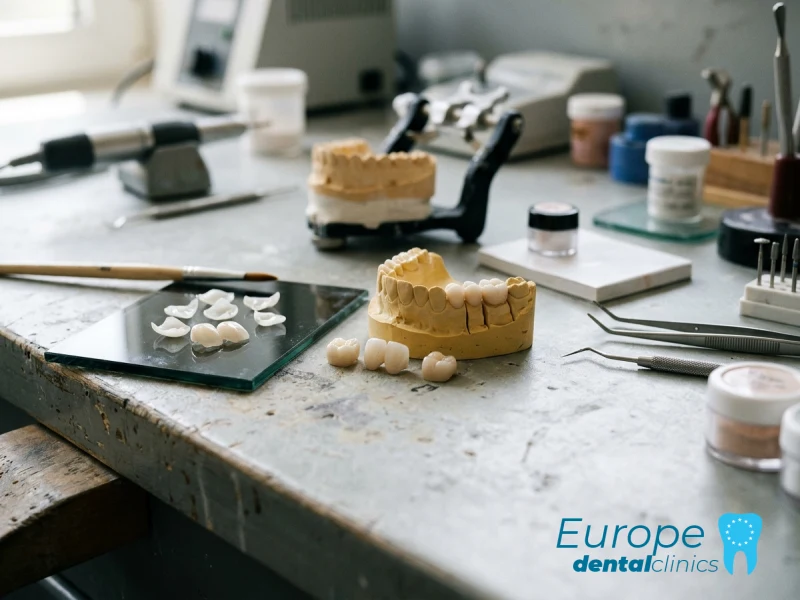
Zirconia crowns and porcelain veneers can both change the appearance of teeth, but they serve different purposes. Crowns cover the whole visible tooth, while veneers mainly cover its front surface. The right choice depends on tooth strength, existing restorations, bite and the amount of healthy enamel available.
For European patients considering treatment in Istanbul, Turkey, understanding this difference is essential before comparing quotations or booking travel. A cosmetic goal alone does not establish which treatment is appropriate.
Zirconia Crowns Versus Porcelain Veneers: The Main Difference
A zirconia crown is a ceramic restoration that surrounds a prepared tooth. It may help restore a heavily filled, fractured or weakened tooth when a more conservative restoration would not provide adequate support.
A porcelain veneer is a thin ceramic facing bonded mainly to the front of a tooth. Veneers can alter colour, shape and proportions, usually while preserving more tooth tissue than a full crown.
Explore our dental treatment options, discover our clinic locations and meet our dentists for further information.
Materials and Appearance
Zirconia is also a ceramic
The comparison involves both material and restoration design. Zirconia is a strong dental ceramic used for crowns; porcelain veneers are commonly made from glass ceramics such as lithium disilicate or feldspathic porcelain.
Both can produce natural-looking results. Appearance depends on material selection, thickness, the underlying tooth colour and laboratory work. More translucent zirconia options exist, but strength and appearance vary between formulations.
When a Zirconia Crown May Be Appropriate
A dentist may recommend a crown when substantial tooth structure has been lost through decay, fracture or previous treatment. Zirconia can be useful where strength matters, including some back teeth exposed to higher chewing forces.
However, a crown requires preparation around the tooth and across its biting surface. This removal is irreversible. Healthy teeth should not automatically receive crowns simply to create a uniform smile.
When Porcelain Veneers May Be Suitable
Veneers may suit teeth with sound underlying structure where the main concerns are persistent discolouration, small chips, uneven contours or selected gaps. Bonding is generally more predictable when sufficient healthy enamel remains.
They cannot reliably solve every alignment or bite problem. Significant crowding, active gum disease, untreated decay or heavy tooth grinding may require treatment before veneers are considered.
Tooth Preparation, Risks and Alternatives
Conventional veneers usually require some enamel removal, although the amount varies. “No-prep” veneers suit selected cases and can otherwise create bulky contours. Neither approach should be described as universally reversible.
Both treatments carry risks, including sensitivity, fracture, decay at restoration edges and possible future replacement. Crown preparation can also irritate the tooth’s pulp; some teeth subsequently need root canal treatment.
Alternatives may include whitening, orthodontics, composite bonding, partial-coverage restorations or monitoring without cosmetic treatment. Your dentist should explain why the proposed option offers an appropriate balance of benefit and tissue preservation.
Planning Treatment in Istanbul
An initial photograph assessment can support planning, but the final recommendation requires a clinical examination and appropriate investigations. Ask who will treat you and obtain an itemised plan before consenting.
Allow time for assessment, trial stages and adjustments. Before travelling, agree on aftercare and follow-up, including urgent contact details, arrangements after returning home and responsibility for additional costs. Consent should cover alternatives and uncertainties in a language you understand.
Bite Assessment and Tooth Grinding
The way your teeth meet affects how restorations perform. Your dentist should examine contacts during chewing and sideways movements, checking whether particular teeth carry excessive pressure.
Tooth grinding or clenching can increase the risk of ceramic damage and problems with supporting teeth. A tailored night guard may be recommended after treatment, although it cannot eliminate every risk. Tell the dentist about morning jaw discomfort, headaches or previous broken restorations.
Choosing Shade and Shape
Assessing the proposed appearance
Discuss tooth length, surface texture and brightness alongside colour. A very pale shade may look different in daylight than under surgery lighting. Existing fillings and restorations will not lighten with whitening, so any planned whitening should be discussed before the final shade is selected.
A diagnostic mock-up or temporary restoration can help you assess appearance, speech and comfort. Ask which features remain adjustable and approve the proposed design before the laboratory completes the definitive restorations.
Appointments and Temporary Restorations
Treatment may involve scans or impressions, tooth preparation, laboratory manufacture and fitting. Some clinics use digital workflows, but the number and spacing of appointments depend on clinical complexity and the need for reassessment.
If temporary restorations are fitted, follow instructions about cleaning and eating. Avoid biting hard or sticky foods with them. Contact the clinic if a temporary loosens or your bite feels uneven; do not use household glue to reattach it.
Daily Care After Final Fitting
Protecting teeth and gum margins
Brush twice daily with fluoride toothpaste and clean between teeth using floss or appropriately sized interdental brushes. Ceramic cannot decay, but the tooth underneath remains vulnerable, particularly where the restoration meets the tooth.
Avoid using teeth to open packaging or bite fingernails. Follow advice on returning to normal eating, particularly while local anaesthetic remains active. Arrange ongoing dental examinations so that gum health, bite contacts and restoration margins can be reviewed.
Symptoms That Need Dental Attention
Some short-lived sensitivity can occur after fitting. Persistent pain, pain on biting, increasing sensitivity or a loose restoration needs assessment rather than waiting until your next planned trip.
Seek urgent dental care for swelling, fever or severe worsening pain. Difficulty breathing or swallowing requires emergency medical attention. Keep your treatment records and the treating clinic’s details accessible so a dentist at home can understand what was done.
Longevity and the Full Financial Commitment
Neither option has a fixed replacement date. Service life depends on the remaining tooth, restoration design, bonding or cementation, oral hygiene and chewing forces. Published averages cannot predict an individual result, and a crown’s strength alone does not determine its longevity.
Compare quotations for the same clinical work. Check whether examinations, temporary restorations, protective appliances and adjustments are included. Add accommodation, flights and possible return visits to your budget. Obtain written terms for repairs and replacements, including exclusions, and check travel insurance carefully: elective dental treatment and its complications may not be covered.
How Crowns and Veneers Attach to Teeth
Porcelain veneers depend on an adhesive bond between the ceramic and tooth. The dentist treats the fitting surface and tooth before applying a resin cement. Keeping saliva and blood away during this process is essential because contamination can weaken the bond.
Zirconia requires a different surface treatment from glass ceramics. Depending on the preparation and product, a zirconia crown may be conventionally cemented or adhesively bonded. The dentist should select a protocol suited to the specific material and clinical situation.
Gum Position and Restoration Edges
The position of the gum line influences both appearance and access for cleaning. Where clinically feasible, keeping restoration edges accessible and avoiding unnecessarily deep placement beneath the gums can support maintenance.
Thin gum tissue or existing recession may make the junction between tooth and restoration more noticeable. If gums recede later, an edge that was initially hidden can become visible. Replacing a restoration purely to conceal that junction may involve further tooth preparation.
Restoring Teeth After Root Canal Treatment
A root-filled tooth needs an individual assessment of its remaining walls, cracks and function. Back teeth often benefit from coverage of vulnerable cusps, but this may sometimes be achieved with an onlay rather than a full crown.
The role of a dental post
A post may help retain a core when little tooth structure remains; it does not strengthen the root. Placing one requires additional intervention inside the tooth. A veneer offers limited structural protection and may be unsuitable where extensive damage is the central problem.
Matching One Front Tooth
Restoring a single front tooth can be particularly demanding because its neighbour provides a direct comparison. Natural enamel contains variations in translucency, colour and texture that a single shade designation cannot fully describe.
The laboratory may need detailed photographs and shade information. Dark underlying tooth tissue can also affect the result, especially through thin ceramic. Masking it may require changes to material or thickness, which should be discussed alongside the consequences for tooth preparation.
Effects on Opposing Teeth
A restoration also interacts with the teeth that bite against it. Surface smoothness matters: rough ceramic can contribute to wear of opposing enamel. Zirconia’s hardness alone does not establish how abrasive a finished crown will be.
If the dentist adjusts a ceramic biting surface, appropriate polishing afterwards is important. Report a newly rough area or a sharp edge, even when it causes little discomfort, so it can be examined before further damage occurs.
Combining Treatments Within One Smile
Different teeth may need different approaches. A heavily restored tooth might warrant a crown while an adjacent tooth could be managed with bonding or a veneer. There is no clinical requirement for every visible tooth to receive the same restoration.
Ask for a tooth-by-tooth explanation of the proposal. For a large treatment plan, an independent opinion before preparation can help clarify whether each intervention is justified and whether a staged approach would preserve more future options.
Checking the Treating Dentist’s Credentials
Before committing to treatment in Istanbul, obtain the treating dentist’s full name and check their professional registration through the relevant Turkish authorities. If specialist expertise is advertised, ask which recognised qualification supports that description. A clinic’s marketing name does not identify the clinician responsible for your care.
Clarify who will perform tooth preparation, approve the laboratory work and fit the restorations. These responsibilities should remain clear if several clinicians are involved.
Understanding Digital Smile Previews
A digital simulation can support discussion, but it cannot demonstrate how a restoration will feel or function. Photographs may also conceal decay, cracks and problems beneath existing dental work.
A preview is a planning aid, not a guaranteed result. Ask whether the proposed design has been assessed against your facial movements, available space and tooth proportions. A polished image alone cannot establish that the treatment is achievable or appropriate.
Managing Changes to the Treatment Plan
Occasionally, examination or removal of an old restoration reveals damage that was not apparent beforehand. This may change the available options, the appointment schedule or the cost.
Giving consent to additional treatment
Agree in advance how unexpected findings will be discussed. Unless immediate intervention is necessary, you should have an opportunity to understand the new findings, consider alternatives and decide whether to proceed. A deposit or booked return flight should not determine a clinical decision.
Travel After Sedation or Dental Treatment
If sedation is proposed, request specific instructions about fasting, medicines and supervision afterwards. Depending on the technique, you may need a responsible adult to accompany you and remain with you during recovery. Do not assume you can travel alone immediately afterwards.
There is no single flight interval suitable for every dental procedure. Any accompanying surgery, complications or sedation may change the advice. Ask the treating clinician to confirm when travel is appropriate for your actual treatment and health.
Records to Take Home
Request copies of your clinical records in a format your dentist at home can access. Useful documents include:
- The teeth treated and the procedures performed.
- Relevant radiographs, clinical photographs and scan files where available.
- The ceramic material and cement used, with laboratory documentation where available.
- Details of any complications, prescriptions and recommended reviews.
Arrange secure transfer of sensitive health information and retain your own copies. Records make future assessment easier, especially when another clinician needs to investigate discomfort or repair a restoration.
Repair, Replacement and Future Choices
A small ceramic chip may sometimes be polished or repaired with composite resin. More extensive fractures, decay or an unacceptable fit may require replacement. The appropriate response depends on the location and extent of damage, as well as the condition of the tooth underneath.
Removing an existing restoration can sacrifice additional tooth tissue, and each replacement may become more complex. Discuss this long-term maintenance burden before beginning elective treatment, particularly if you are young and could face several replacement cycles over your lifetime.
Frequently asked questions
What is the main difference between zirconia crowns and porcelain veneers?
A zirconia crown covers the visible portion of a tooth, helping restore its shape, strength and appearance. A porcelain veneer is a thin ceramic shell bonded mainly to the front surface of a tooth to improve its appearance. Crowns are commonly used for significantly damaged teeth, while veneers usually suit teeth with adequate healthy structure.
When might a dentist recommend a zirconia crown instead of a porcelain veneer?
A dentist may recommend a zirconia crown for a tooth with extensive decay, a large filling, a fracture or substantial wear. Crowns may also protect teeth after root canal treatment, depending on the tooth and how much structure remains. Veneers are generally more suitable for cosmetic concerns such as discolouration, small chips, minor gaps or slight irregularities in shape.
Do zirconia crowns require more tooth preparation than porcelain veneers?
Zirconia crowns generally require more tooth reduction because they cover the front, back, sides and biting surface. Veneers usually require less preparation, mainly on the front surface, although the amount depends on the desired change and tooth position. Both treatments are usually irreversible once enamel has been removed.
Which looks more natural: zirconia crowns or porcelain veneers?
Both can look natural when carefully planned and made. Porcelain veneers can reproduce the translucency and surface detail of natural enamel, making them a popular option for front teeth. Modern zirconia crowns also offer good aesthetics, although their translucency varies by formulation. The final appearance depends on the underlying tooth colour, ceramic choice and skill of the dental team.
Are zirconia crowns stronger than porcelain veneers?
Zirconia has high resistance to fracture and is often used for crowns on teeth exposed to substantial biting forces. Porcelain veneers are thinner and depend strongly on a reliable bond to the tooth, ideally to enamel. Their performance cannot be compared by material strength alone: tooth condition, restoration design, bite and habits such as grinding all affect the risk of damage.
How long do zirconia crowns and porcelain veneers last?
Both can last for many years. Crowns commonly last around 10–15 years, and porcelain veneers often last around 10–15 years or longer, but these are broad estimates rather than guarantees. Oral hygiene, gum health, tooth decay, grinding and the quality of the restoration influence longevity. Either treatment may need repair or replacement sooner.
Are zirconia crowns or porcelain veneers better for people who grind their teeth?
Teeth grinding increases the risk of fractures, chips, wear and loosening with either option. Zirconia crowns may be suitable where damaged teeth need extensive protection, but grinding alone does not justify crowning otherwise healthy teeth. A dentist should assess the bite and remaining tooth structure and may recommend a protective night guard alongside treatment.
Does getting zirconia crowns or porcelain veneers hurt?
Local anaesthetic is commonly used during tooth preparation to keep treatment comfortable. Some people experience temporary sensitivity or gum tenderness afterwards, particularly when temporary restorations are fitted. Persistent pain, worsening sensitivity or discomfort when biting should be assessed by a dentist, as the bite or underlying tooth may need attention.
Are zirconia crowns more expensive than porcelain veneers?
There is no universal price difference: a zirconia crown may cost more or less than a porcelain veneer depending on the practice, laboratory, complexity and location. Additional treatment, such as repairing decay or treating gum disease, can increase the total cost. Ask for an itemised estimate covering preparation, temporary restorations, fitting and follow-up care.
How should I care for zirconia crowns and porcelain veneers?
Brush twice daily with fluoride toothpaste, clean between your teeth daily and attend dental check-ups at the intervals your dentist recommends. Neither restoration can develop decay, but the natural tooth beneath or around its edges can. Avoid biting hard objects or using your teeth to open packaging, and wear a prescribed night guard if you grind your teeth.
